Last updated October 31, 2026
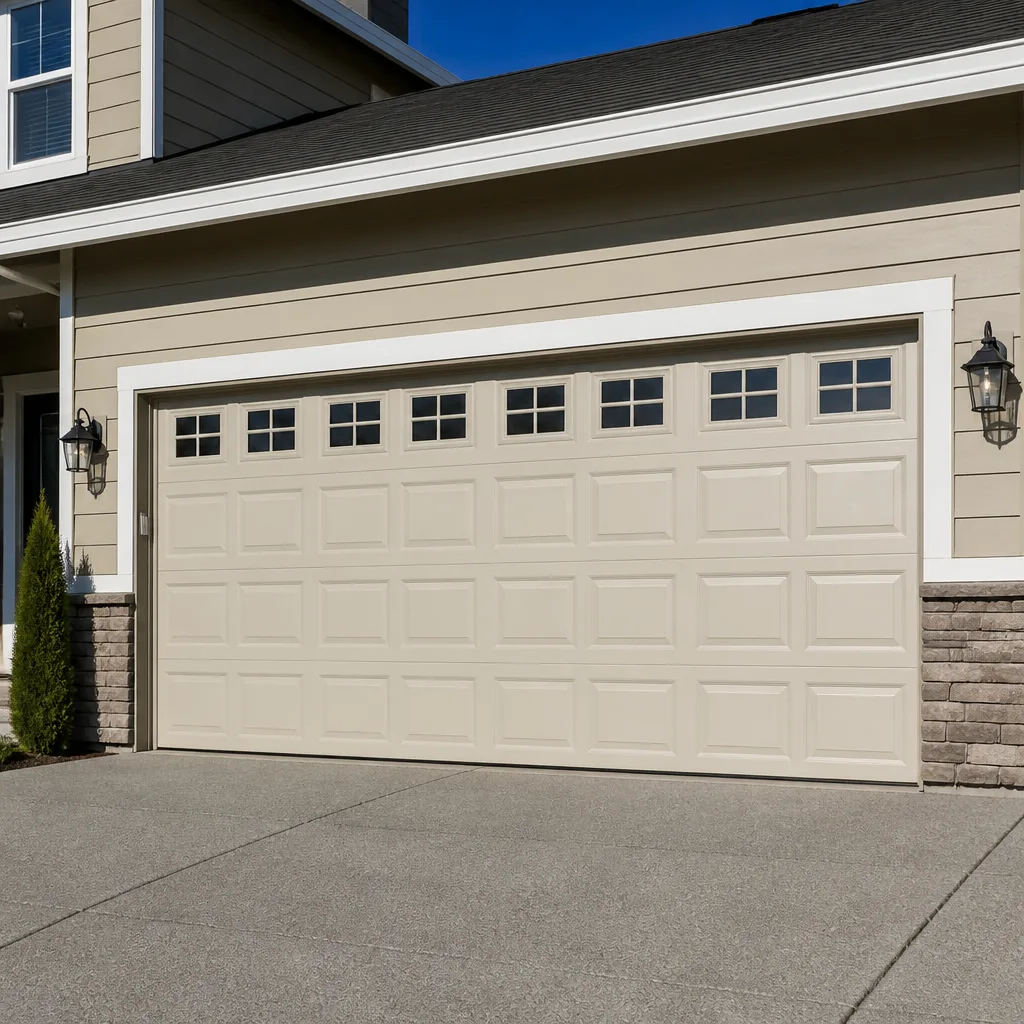 Raised-panel steel
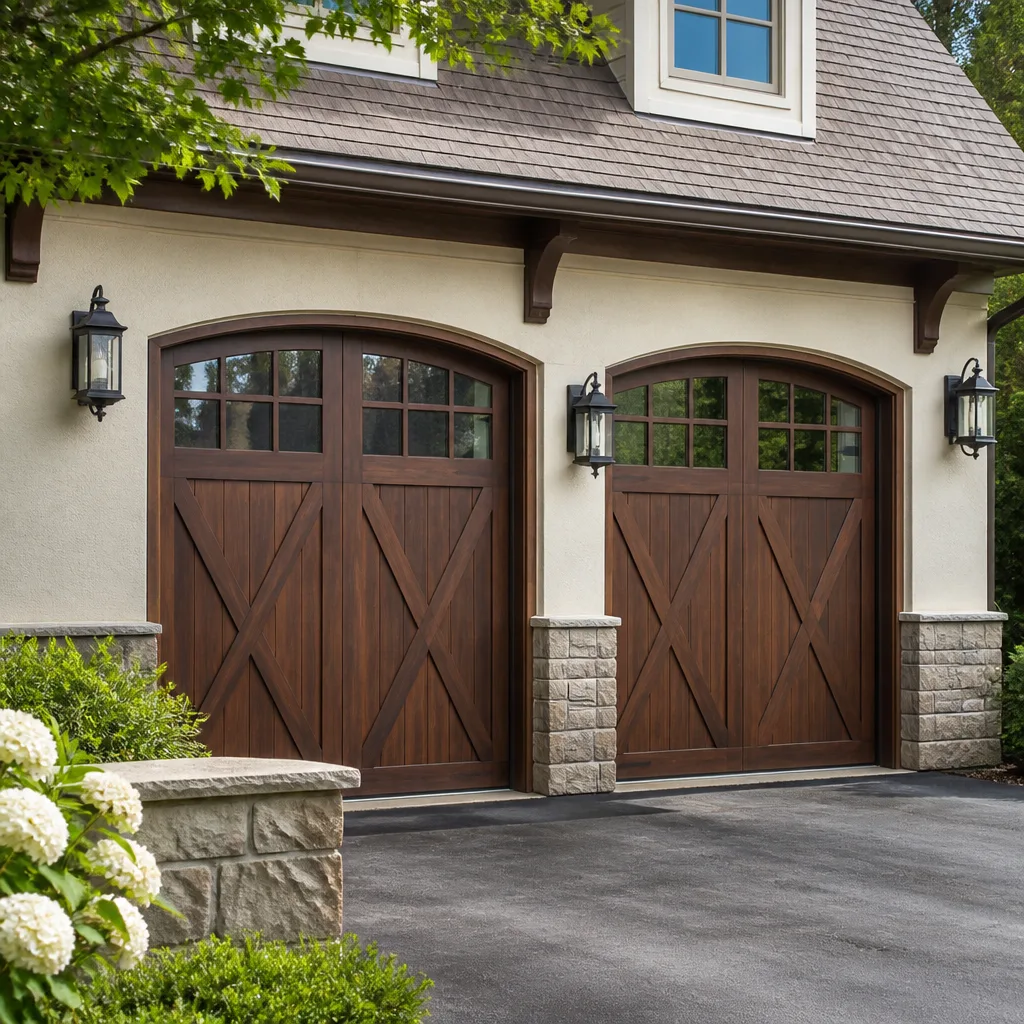 Carriage house
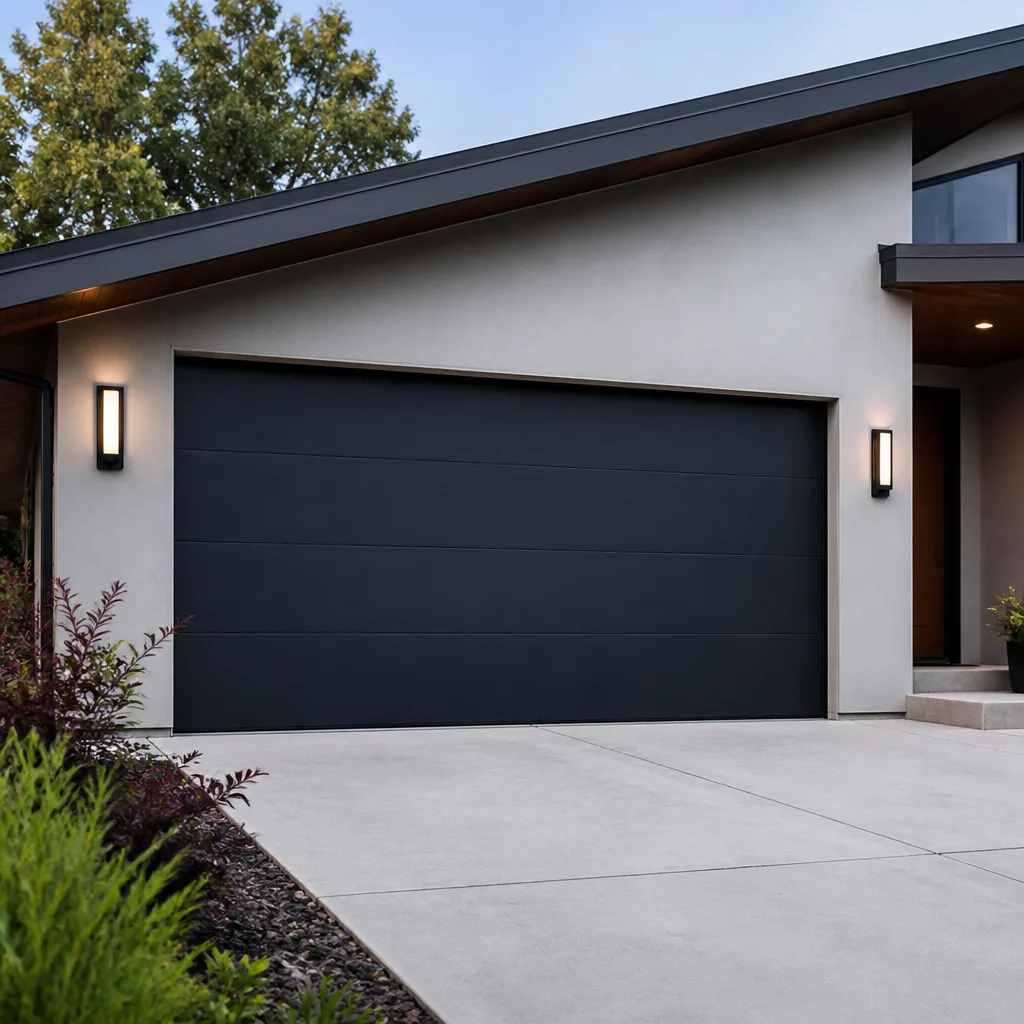 Modern flush
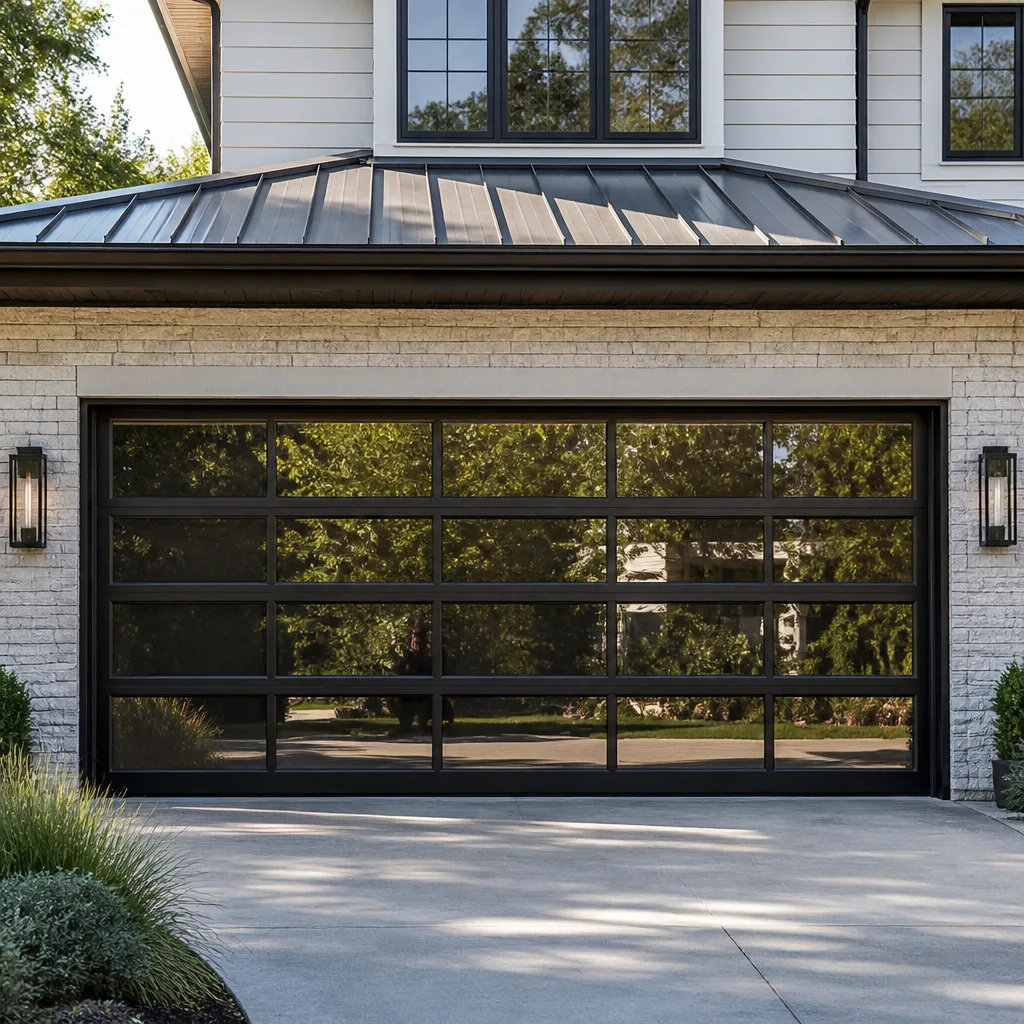 Full-view glass
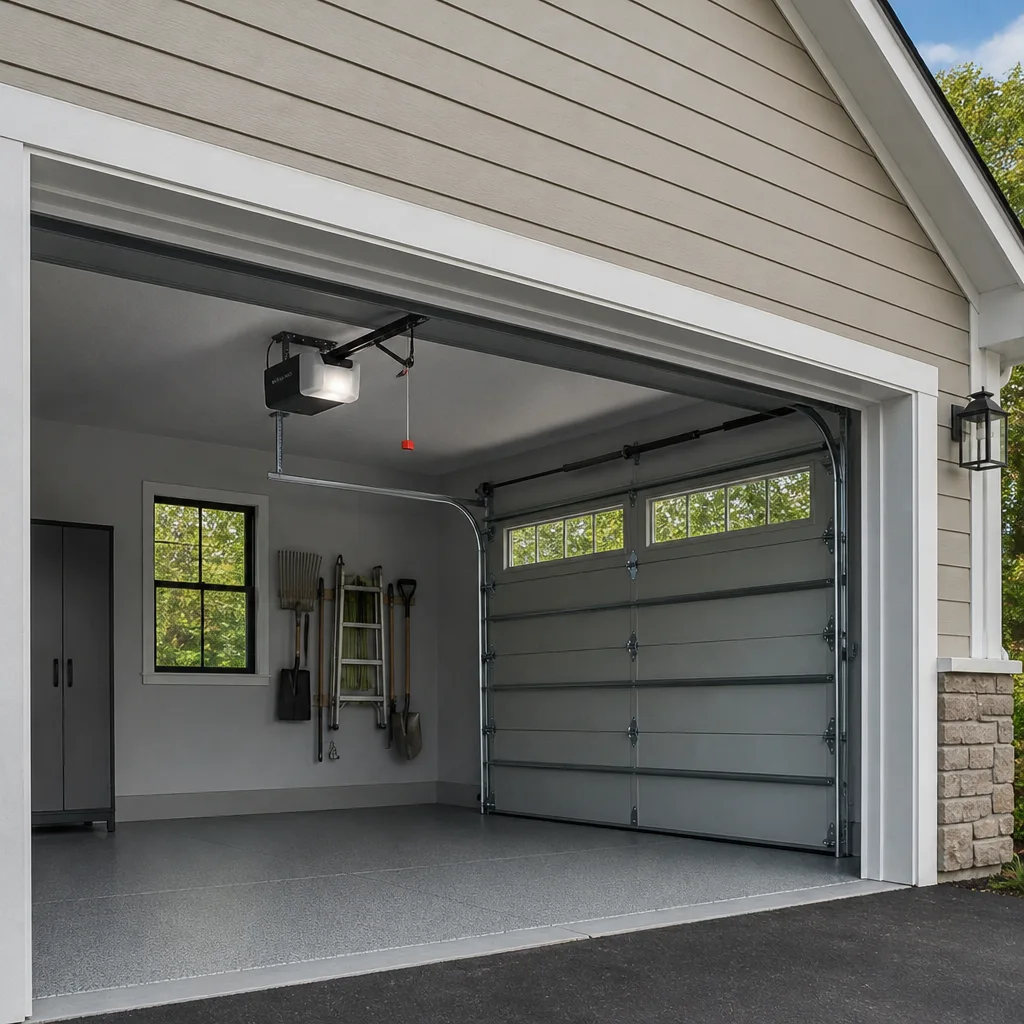 LiftMaster openers
 Chamberlain openers
Full 25-point door and opener safety check with every visit - springs, cables, rollers, tracks, and your LiftMaster or Chamberlain opener included
You get a price before we start. It does not change when the truck arrives.
Get your free estimateHow to Hire a Garage Door Contractor in West Hollywood: A Step-by-Step Guide
Ask any garage door company in LA which brand they recommend and most will name the one they have the highest margin on. That’s not cynicism, it’s the economics of a market where single-brand dealerships dominate the West Hollywood phone book. The right question to ask a prospective contractor is how many brands they regularly service. If the answer is one or two, you already know whose interest they’re working in. This guide walks through exactly how to screen contractors, verify credentials, read quotes, and spot the operators who make this market genuinely risky for homeowners in West Hollywood, while our complete garage door repair guide for West Hollywood homeowners covers the full repair process in depth.
Quick Answer
To hire a garage door contractor in West Hollywood, verify their California contractor license on the CSLB website, confirm they service multiple door and opener brands rather than one product line, ask for a written quote with separate line items for parts and labor, and check that they diagnose before recommending replacement. A thorough contractor will offer a service call that includes diagnostic time, will quote the price before work begins, and won’t pressure you toward a new door when a repair makes more sense.
Styles & brands we work with
Table of Contents
- The Five Screening Questions That Expose a Branded Dealer
- California Contractor License Verification: What to Check and Why
- How to Read a Garage Door Quote: Line Items That Signal Honesty vs. Padding
- Red Flags Specific to the West Hollywood Market
- What a Fair Service Call and Diagnostic Fee Looks Like in LA
- Repair vs. Replacement: How to Know If You’re Being Upsold
- The Hiring Process: A Step-by-Step Walkthrough
- Common Mistakes to Avoid
The Five Screening Questions That Expose a Branded Dealer
The single biggest tell in this industry is how a contractor answers the brand question. A shop that carries one manufacturer has a financial incentive to tell you that manufacturer’s product is the only one worth owning. A shop that services multiple brands has already decided to compete on skill rather than exclusivity. Before you ask about price, ask these five questions in order—starting with choosing the right garage door brand for your West Hollywood home. The answers will tell you more than any review page can.
Question 1: “How many garage door and opener brands do you service?”
The right answer is a number of three or more, named without hesitation. We service eight brands, including Genie, Clopay, and Amarr, because homeowners in West Hollywood have doors made by all of them. A contractor who services one brand is a dealer. A contractor who services eight is a technician. The difference matters when you’re told a repair isn’t possible and a new door is your only option.
Question 2: “Do you repair openers as a standalone service?”
This question separates diagnosticians from sales teams. A garage door opener is a motorized system with a circuit board, drive mechanism, safety sensors, and remote communication. It can fail in ways that have nothing to do with the door panels. If a contractor says they don’t repair openers, or that opener problems always require a new unit, they’ve just told you they lack the diagnostic depth for motorized systems. Our Garage Door Opener Repair in West Hollywood service exists specifically because motorized systems fail independently of doors, and a trained tech can often fix them in one visit.
Question 3: “Will you diagnose my current door before recommending replacement?”
A contractor who quotes a new door before inspecting the existing one is not doing repair work. They’re doing sales. Torsion springs, cables, rollers, bearings, and panels can all be replaced individually. A door that’s sagging, noisy, or opening unevenly often needs a Garage Door Repair in West Hollywood, not a trip to a showroom. Insist on a diagnostic visit before any replacement discussion.
Question 4: “What’s your markup on parts?”
Most contractors won’t tell you their exact markup, but watch how they respond. If they can’t explain how parts pricing works, or if they bundle everything into one opaque number, you’ll never know what you’re actually paying for. Honest shops break out parts and labor so you can compare apples to apples. It’s not about getting the cheapest parts, it’s about knowing the price is honest.
Question 5: “Can you service the door and opener I already own, or will I need to switch brands?”
This is the direct version of the brand question. The answer should be some version of “we work on what you already have.” If a contractor tells you they only service the brand they sell, you’re not talking to a repair professional. You’re talking to a retail operation with a truck. That’s a legitimate business model, but it’s not what most West Hollywood homeowners actually need when a 15-year-old Wayne Dalton door starts acting up.
California Contractor License Verification: What to Check and Why
In California, anyone who contracts for work valued at $500 or more in labor and materials must hold a valid contractor’s license from the Contractors State License Board (CSLB). Garage door work falls under specific classifications, and knowing which ones to look for protects you from unlicensed operators who are common in dense rental markets like West Hollywood. An unlicensed contractor has no bond, no insurance requirement, and no state oversight. If something goes wrong, you’re on your own.
Here’s exactly how to verify a license, step by step:
- Get the license number. A legitimate contractor will provide it without hesitation. It starts with six digits followed by a classification letter. If they dodge the question, end the conversation.
- Go to CSLB’s website at cslb.ca.gov and use the “Check a License” tool. You’ll need the six-digit number.
- Confirm the license is active. The CSLB status will show “Active,” “Suspended,” “Revoked,” or “Expired.” Only active licenses are valid.
- Check the classification. For garage door work, the most relevant classifications are C-61/D-28 (Door and Gate) and D-28 specifically covers garage doors, gates, and related hardware. Some general building contractors (B) can also handle garage door installation as part of larger projects.
- Verify the business name matches. The name on the license should match the name on the invoice. Mismatches are a red flag for license rental or subcontracting shenanigans.
- Look for insurance and bond information. CSLB requires a $25,000 bond. Beyond that, ask the contractor directly about liability insurance and workers’ compensation coverage. If they send employees into your home, they should carry workers’ comp.
West Hollywood has a high concentration of rental properties, and we’ve seen unlicensed operators target landlords and property managers with lowball bids that undercut legitimate shops. The savings disappear the moment something goes wrong and there’s no bond, no insurance, and no CSLB complaint process to pursue. Checking the license takes five minutes. It’s the highest-value screening step in this entire guide.
How to Read a Garage Door Quote: Line Items That Signal Honesty vs. Padding
A garage door quote is a simple document, but the way it’s structured tells you a lot about the company behind it. An honest quote has discrete line items. A padded quote hides costs inside bloated categories. Here’s what to look for.
Honest quote structure:
- Diagnostic fee – listed separately, usually credited toward the repair if you proceed
- Parts – named individually: torsion springs, cables, rollers, bottom seal, opener gear, circuit board
- Labor – listed as a separate line item, sometimes broken into hours or flat rate per job type
- Disposal fee – if old parts or a door need hauling away, it should be explicit
- Tax – calculated at the end, clearly separated
Red flags embedded in quotes:
- “Complete door system” as a single line item with no breakdown. What’s in it? Springs? Track? Panels? A single line hides individual part costs.
- “Premium hardware upgrade” with no brand or part number specified. Premium according to whom?
- “Tune-up package” that includes nothing but lubricant and a visual inspection, priced like a repair.
- Multiple “recommended” replacements that weren’t discussed during the diagnostic. Legitimate contractors recommend only what the diagnosis supports.
- A new door quote with a “limited-time discount.” Real pricing doesn’t expire by Thursday. Pressure tactics do.
In West Hollywood, where property values are high and many homes feature custom or architectural doors, quote padding often appears as “luxury” or “designer” surcharges on standard hardware. A Genie opener or an Amarr door costs what it costs. If the price on the quote doesn’t match the manufacturer’s published retail range, ask why. The answer should be specific and verifiable.
Red Flags Specific to the West Hollywood Market
West Hollywood isn’t like the suburban single-family markets that dominate garage door service areas. It’s a high-density city with rent-stabilized apartment buildings, historic bungalows, condominium complexes, and a transient renter population. That mix creates three specific problems we see more often in WeHo than anywhere else in LA.
Lowball pricing targeted at rental property owners. Landlords managing multiple units are prime targets for unlicensed operators offering cut-rate spring replacements and “bulk discounts” on opener swaps. The work is often done with the cheapest available parts, and when the tenant calls two months later about a door that won’t close, the original contractor’s phone number no longer works. If you own rental property in West Hollywood, insist on license verification and a written warranty, or offer the Gold Star Garage Door Service home standard as a point of comparison.
Condominium and HOA confusion. Many West Hollywood residents live in buildings where the garage door is technically common-area property managed by the HOA, while individual garage doors on townhome units are homeowner responsibility. Unscrupulous contractors will happily take payment from whichever party answers the door without clarifying who actually owns the door. Get the ownership question settled before anyone starts work.
Historic building complications. West Hollywood has older buildings, some with detached garages built in the 1920s and 1930s. These garages often have non-standard openings, unusual track configurations, or structural issues that a generic single-brand dealer won’t recognize until the job goes sideways. Hiring an experienced contractor who’s worked on older doors matters more here than in a tract-home suburb where every garage is identical.
Unmarked vans and “cash-only” operators. Legitimate contractors in West Hollywood run marked vehicles, carry branded invoices, and accept normal payment methods. The cash-only operator with no visible branding and a burner phone is a known presence in this city. They’ll quote a low number, ask for cash upfront, and vanish.
What a Fair Service Call and Diagnostic Fee Looks Like in LA
In the current Los Angeles market, a standard garage door service call with diagnostic time typically runs between $75 and $125. That fee is usually credited toward the repair if you proceed. Some companies advertise $29 or $49 “tune-up specials” or free service calls, and those numbers exist for a reason: they get a technician to your door where the real selling happens. The diagnostic fee isn’t where honest contractors make money, and artificially low bait fees signal that the money will be collected somewhere else.
Here’s the pricing landscape in LA right now:
- Service call + diagnostic: $75-$125, credited toward repair
- Torsion spring replacement (pair): $180-$340 including parts and labor
- Cable replacement: $120-$200
- Roller replacement (all rollers): $100-$180
- Opener repair (gear, capacitor, or logic board): $150-$350 depending on brand and part
- Bottom seal replacement: $80-$150
- Full door replacement (standard single-car): $1,200-$3,500 depending on material, insulation, and hardware
These are LA market ranges, not West Hollywood-specific premiums. Contractors who charge dramatically more than these ranges should explain exactly why. Custom doors, historical building constraints, or unusual hardware can push prices higher legitimately, but the explanation should be forthcoming before work begins, not after. Always get the total price in writing and confirmed before the technician starts turning wrenches.
Repair vs. Replacement: How to Know If You’re Being Upsold
The most profitable moment for a dishonest contractor is when a homeowner with a broken door is told the entire system needs replacing. Sometimes that’s true. A 25-year-old wooden door with rotted panels, rusted tracks, and a dead opener is a legitimate candidate for replacement. But far more often, the door can be repaired and the customer is being steered toward a new sale because that’s where the margin lives.
Here’s how to assess repair vs. replacement on your own before the contractor weighs in:
- Age of the door. Steel doors typically last 20-30 years in West Hollywood’s mild climate. If yours is under 15 years old, repair is almost always the better financial call.
- Condition of the panels. Dents, cracks, and rust on one or two panels don’t require a full replacement. Individual panels can usually be replaced, matching the existing door.
- Spring condition. Torsion springs fail after 10,000-15,000 cycles. If your springs broke, replacing them (a $180-$340 job) restores your door fully. A contractor who says broken springs mean you need a new door is not being honest with you.
- Opener age. Openers last 10-15 years. If yours is 8 years old and making grinding noises, a gear replacement may buy you years more. If it’s 18 years old, replacement makes sense.
- Track condition. Bent tracks can sometimes be realigned. Severely damaged tracks on an old door are a legitimate reason to replace the whole system.
We’re not opposed to new installations. We do them regularly. But any honest contractor starts from a repair-first position. A Garage Door Installation in West Hollywood should be the conclusion of a diagnostic process, not the opening offer. If a contractor can’t tell you specifically what’s broken and why it can’t be fixed, they haven’t done their job.
The Hiring Process: A Step-by-Step Walkthrough
If you follow these steps in order, you’ll end up with a competent contractor who charges a fair price and stands behind the work. For ongoing maintenance tips and more guides & resources, visit our blog. The process takes an hour of your time and saves you from the operators who rely on you skipping it.
- Collect three candidate contractors. Get referrals from neighbors, check Google Maps for local shops, and note which companies have actual West Hollywood addresses rather than a PO box.
- Run CSLB checks on all three. Active license, correct classification, matching business name. Eliminate anyone who fails.
- Call each one and ask the five screening questions from this guide. Note how they answer. A contractor who’s annoyed by the brand question is telling you something.
- Check their service area. Some LA county garage door companies list broad service areas but dispatch from far away, which matters for emergency calls. A West Hollywood company or one with a nearby dispatch point will reach you faster.
- Schedule a diagnostic visit. Expect a service call fee in the $75-$125 range, credited toward repair. Get that in writing before the visit.
- During the diagnostic, watch what the technician does. Do they inspect the springs, cables, rollers, tracks, and opener? Or do they glance at the door and start talking about new models? The inspection itself is diagnostic signal.
- Request a written quote. Line items for parts, labor, any disposal, and tax. No line items, no deal.
- Confirm the price won’t change once work begins. Ask directly: “Is this the total price I’ll pay, or will there be additional charges?” Get the answer in writing or noted on the quote.
- Approve the work and pay after completion. Reputable contractors don’t require full payment upfront. A deposit may be normal for large installations, but full payment before work is a red flag.
- Keep the invoice and warranty documentation. Springs and openers carry manufacturer warranties, and the labor warranty should be stated in writing on the invoice.
Common Mistakes to Avoid
- Hiring the first contractor who answers the phone. Emergency calls feel urgent, and operators bank on you not having time to screen. The five-minute CSLB check works even when you’re in a hurry.
- Accepting a quote over the phone without an inspection. No legitimate contractor can quote a spring replacement without seeing the spring, the door size, and the track configuration. Phone quotes are bait.
- Ignoring the brand question. A contractor who only knows one brand will find reasons that brand is the only solution to your problem. West Hollywood homeowners deserve better than a sales script.
- Paying cash upfront for a “deal.” The contractor who asks for cash before the work starts is financing their own operations with your money. Legitimate businesses don’t work that way.
- Not asking about the warranty. If a spring breaks six months after replacement, is the labor covered? Parts? You need to know before the work, not after.
- Confusing the HOA’s door with your door. In West Hollywood condo and townhome buildings, clarifying ownership prevents you from paying for work that’s the association’s responsibility, or vice versa.
- Choosing the cheapest quote without comparing line items. A $79 spring replacement is either using inferior parts or will generate “found” additional charges during the visit. Cheap quotes are cheap for a reason.
See the difference
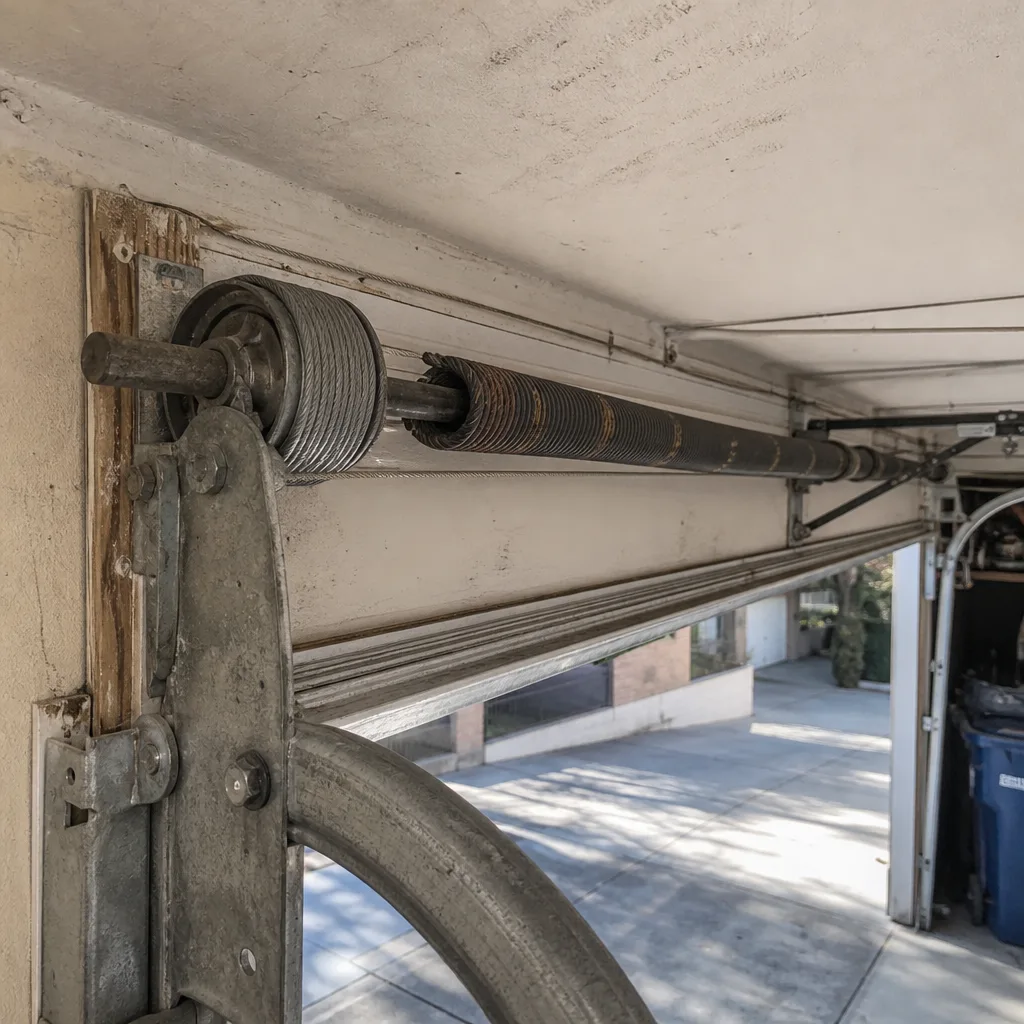 Before
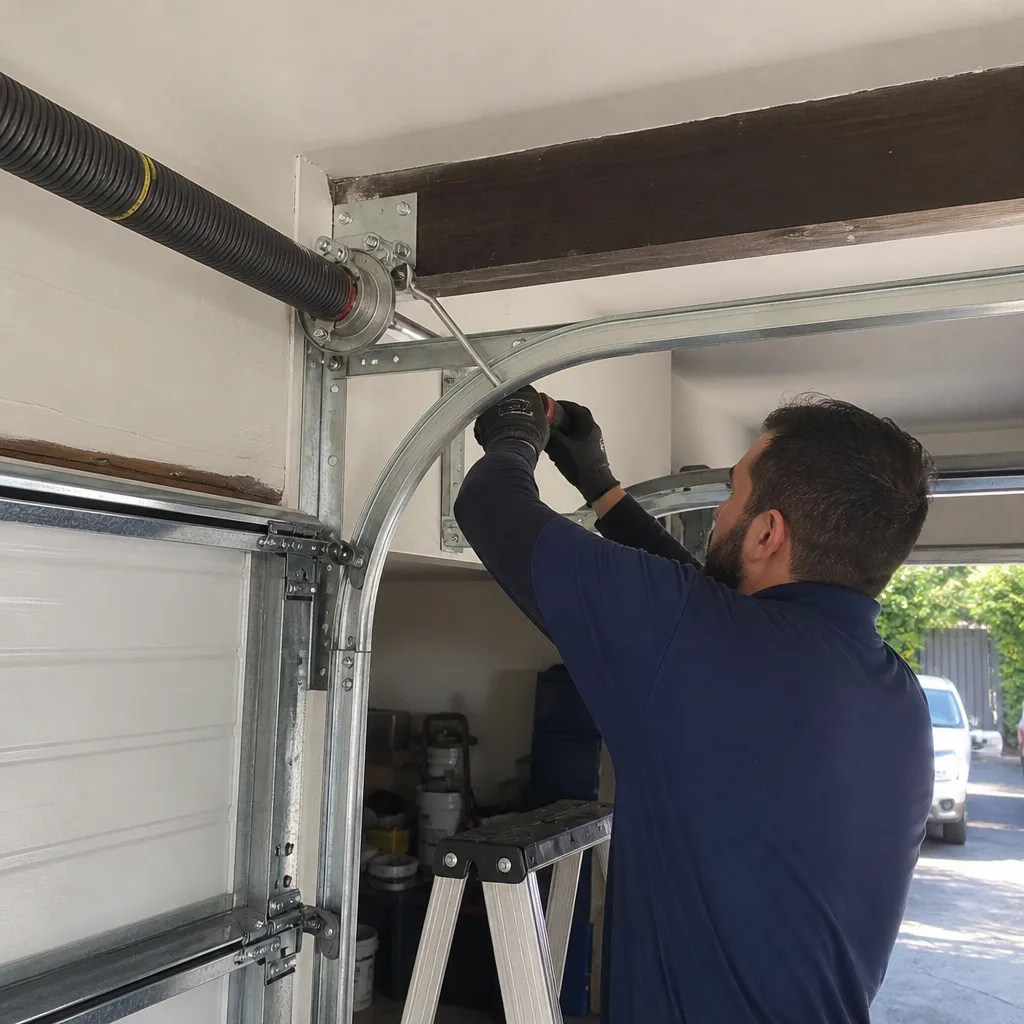 After
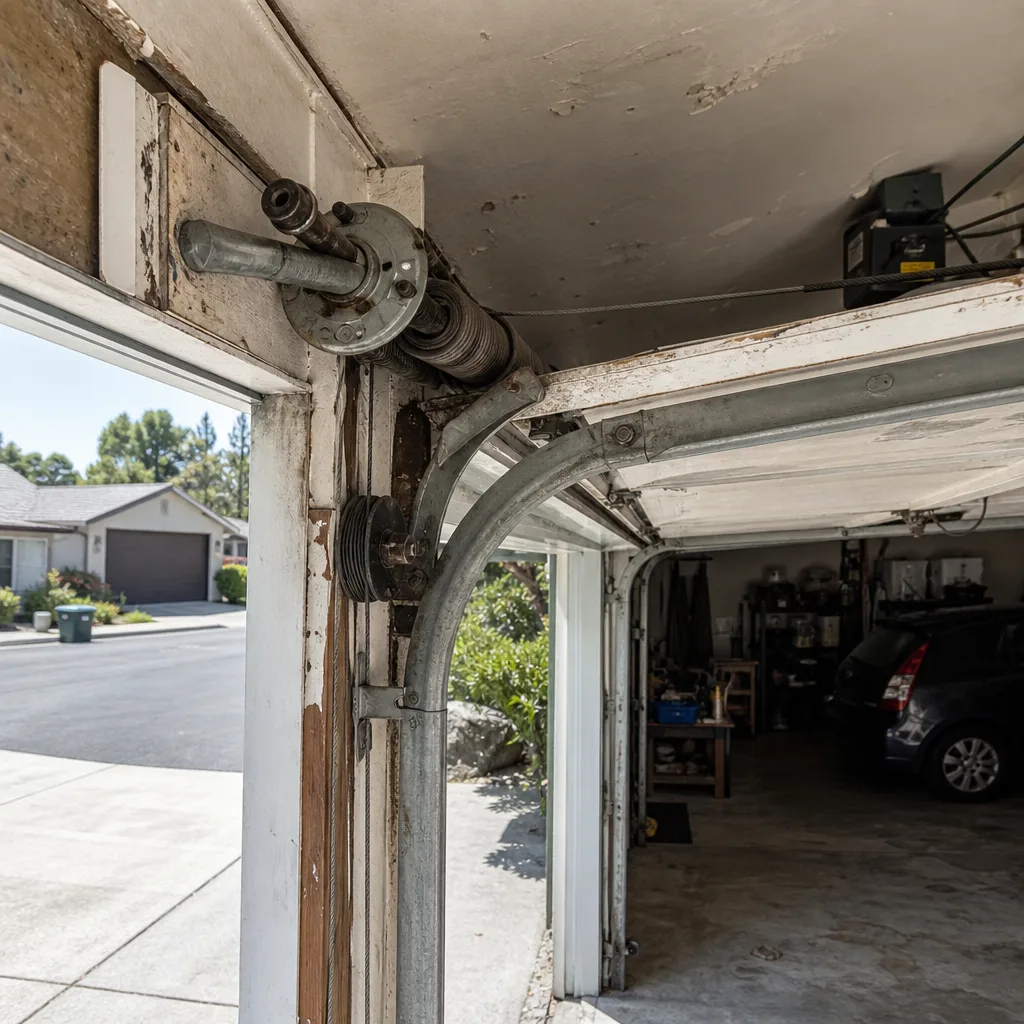 Before
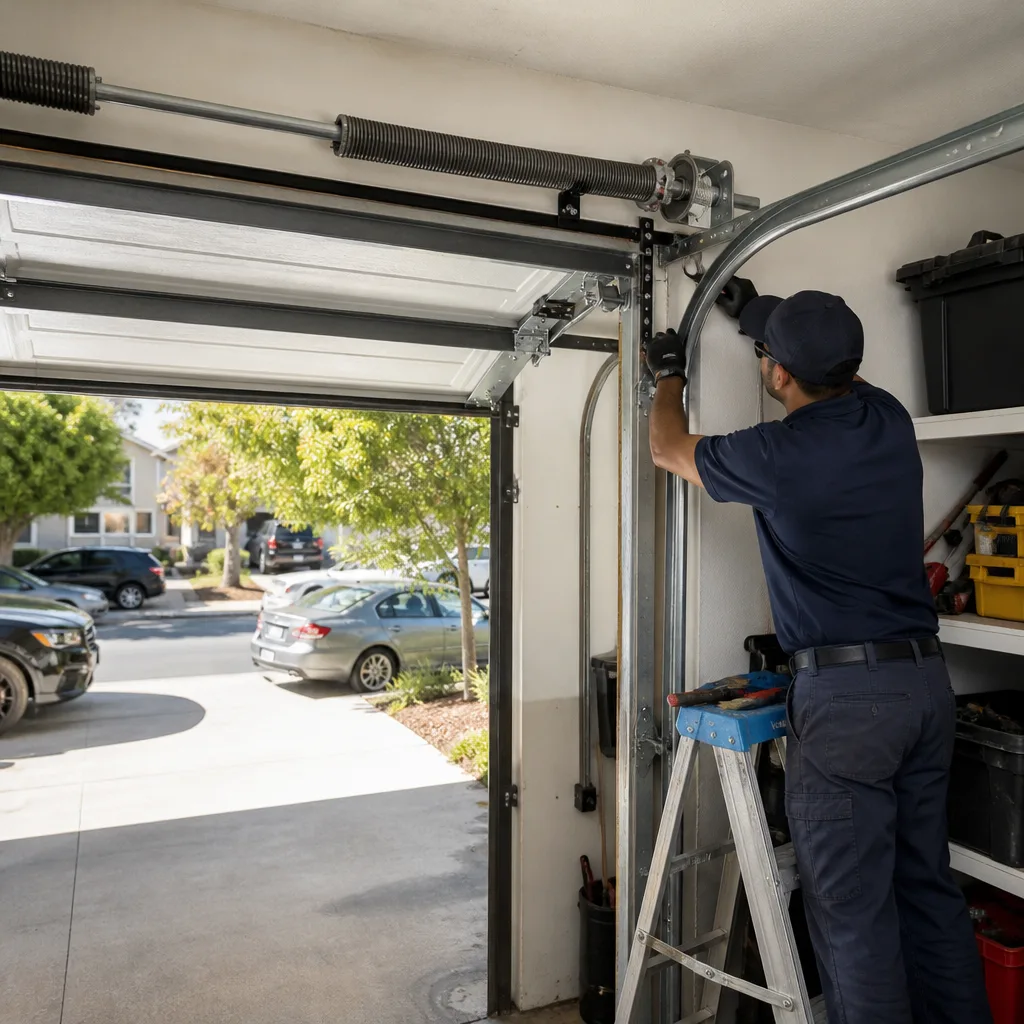 After
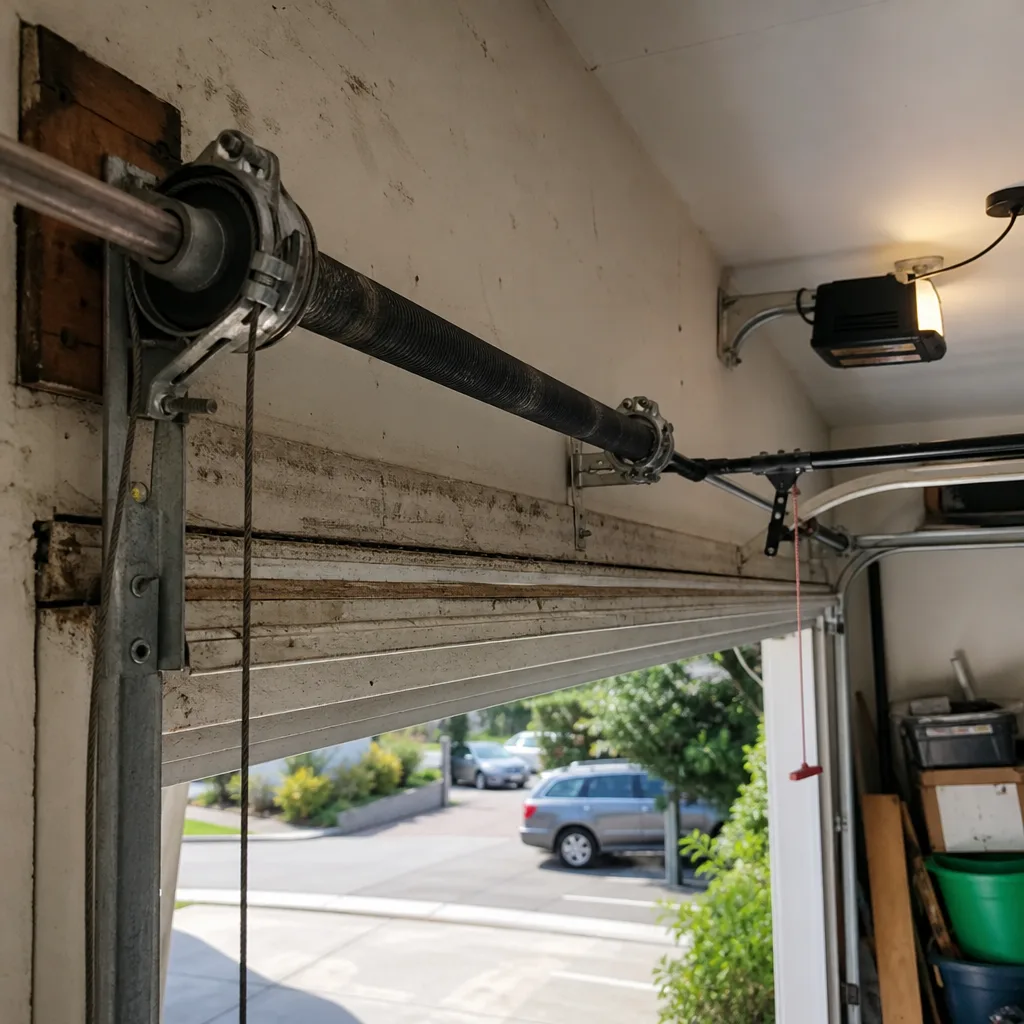 Before
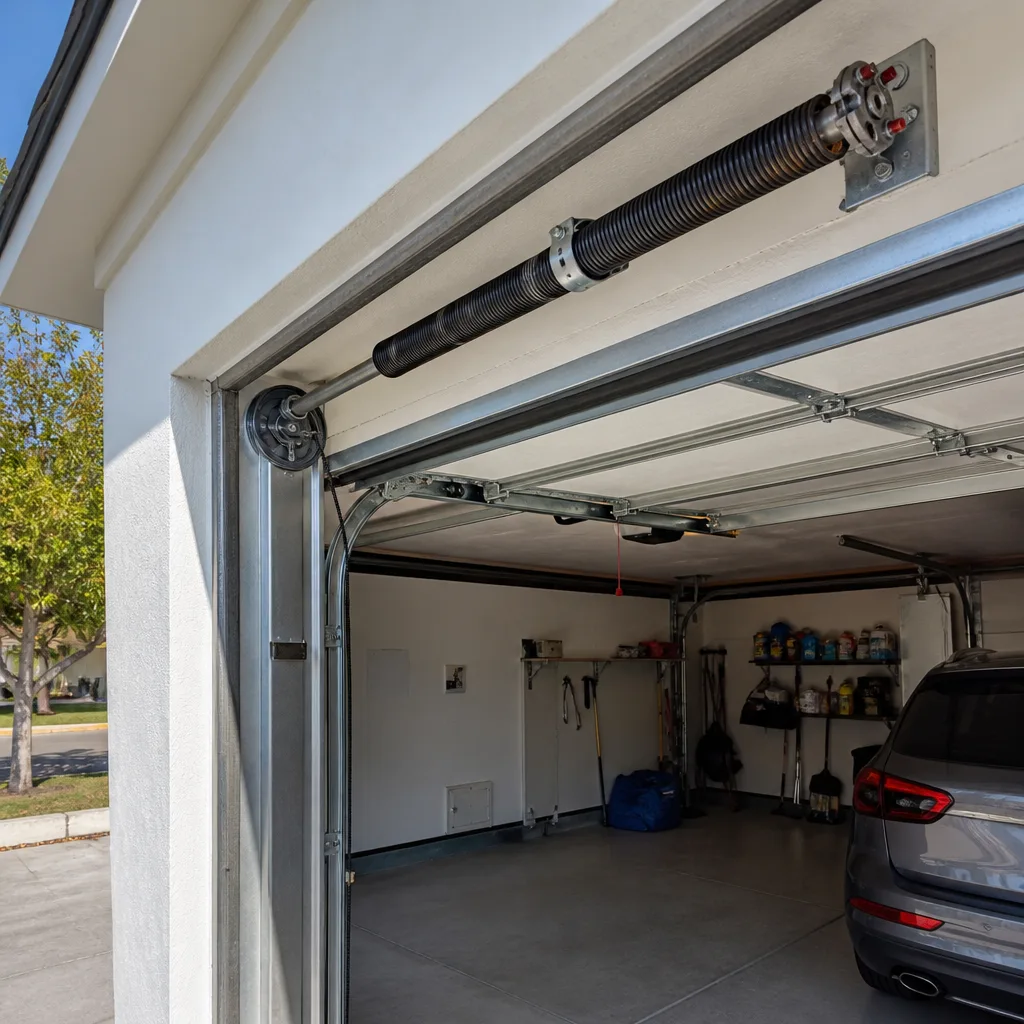 After
When to Call a Professional
Garage doors are heavy, under tension, and connected to electricity. A torsion spring contains enough stored energy to cause serious injury if mishandled, and an opener’s electrical wiring demands respect. You should call a professional any time a spring breaks, a cable snaps, the door comes off its tracks, or the opener’s electrical system misbehaves. Attempting a DIY torsion spring replacement is genuinely dangerous, not just inconvenient. If your door is making grinding noises, moving unevenly, or failing to reverse when it hits an obstruction, these are signs of mechanical or sensor problems that need a trained eye. Gold Star Garage Door Service offers free estimates in West Hollywood. Call (866) 810-8325.
Frequently Asked Questions
A service call with diagnostic time in the West Hollywood and greater LA market typically costs $75-$125, credited toward repair. Common repairs like torsion spring replacement run $180-$340, while full door replacement ranges from $1,200-$3,500 depending on materials. Call (866) 810-8325 for an exact quote on your specific door and situation.
For spring, cable, and roller repairs, most qualified contractors in the West Hollywood area can dispatch a technician within 24 hours, often the same day for emergency calls. Opener repairs may require ordering a brand-specific part. Call (866) 810-8325 to check current availability.
An honest contractor quotes a firm price after the diagnostic inspection and confirms that number before any work begins. If a contractor gives you a phone quote and then discovers additional problems on site, the new charges should be discussed and approved by you before work proceeds. The total price should always be agreed upon in writing before tools come out.
Contractors who service multiple brands, including Genie, Clopay, and Amarr systems, typically stock common parts on the truck: springs, cables, rollers, hinges, sensors, and common opener components. Less common parts may need to be ordered. Ask about parts availability when you schedule your visit.
Go to the CSLB website at cslb.ca.gov, enter the contractor’s six-digit license number, and confirm the license is active with a relevant classification such as C-61/D-28 (Door and Gate). Verify the business name matches what’s on the invoice. This five-minute check eliminates unlicensed operators.
If your door is under 15 years old and the panels are in decent condition, repair is almost always the right call. Broken springs, cables, and rollers are repairable components. Replacement makes sense for doors beyond 25 years old, severely damaged panels, or structurally compromised tracks. A contractor who skips the diagnostic and recommends replacement immediately is selling, not repairing.
The Bottom Line
Hiring a garage door contractor in West Hollywood is a screening exercise. Verify the CSLB license. Ask the brand questions. Read the quote line by line. Avoid cash-only operators and bait pricing. The contractor worth hiring will answer questions directly, service multiple brands without hesitation, diagnose before recommending replacement, and put everything in writing. A garage door is a mechanical system you use every day. You deserve a contractor who treats it with the same respect you do. And when someone asks which brand to recommend, the honest answer is: whichever one you already own.
Written by the team at Gold Star Garage Door Service, serving West Hollywood since 2018.