Last updated October 31, 2026
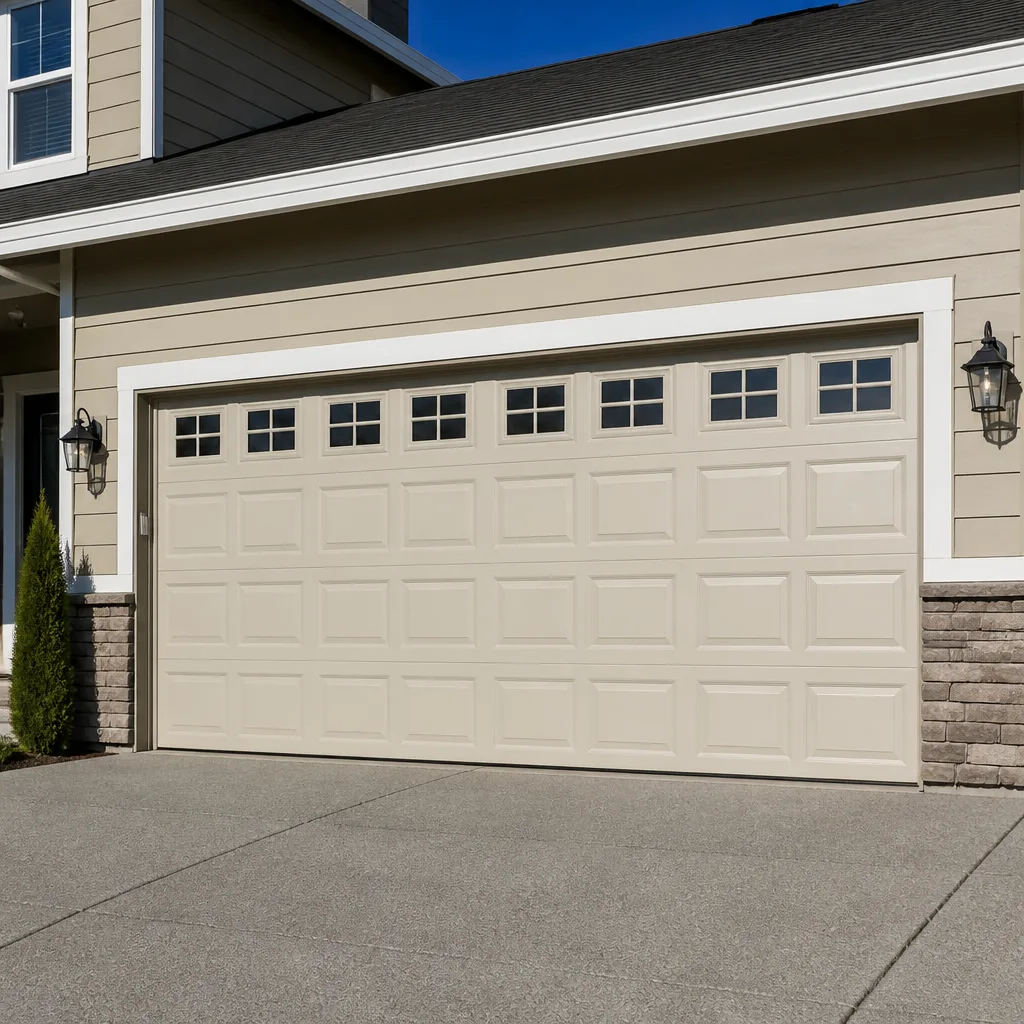 Raised-panel steel
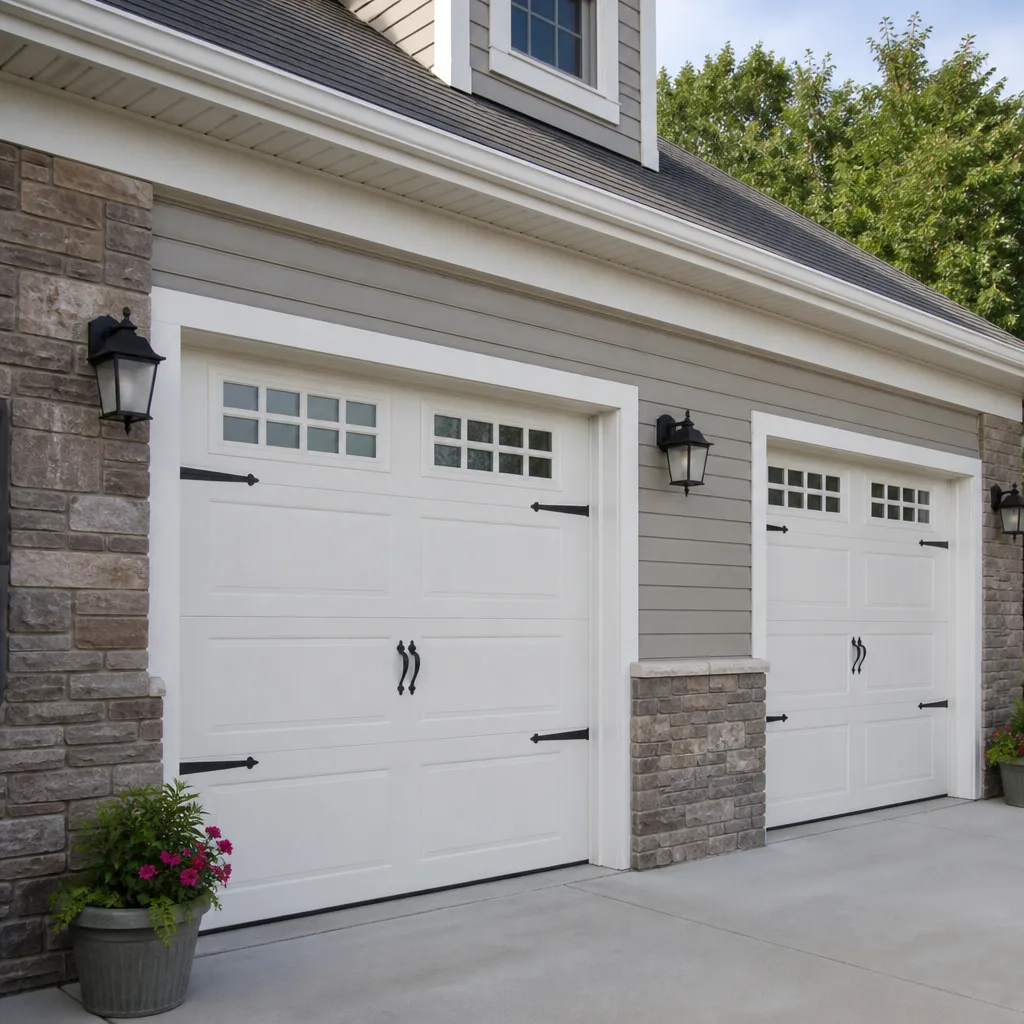
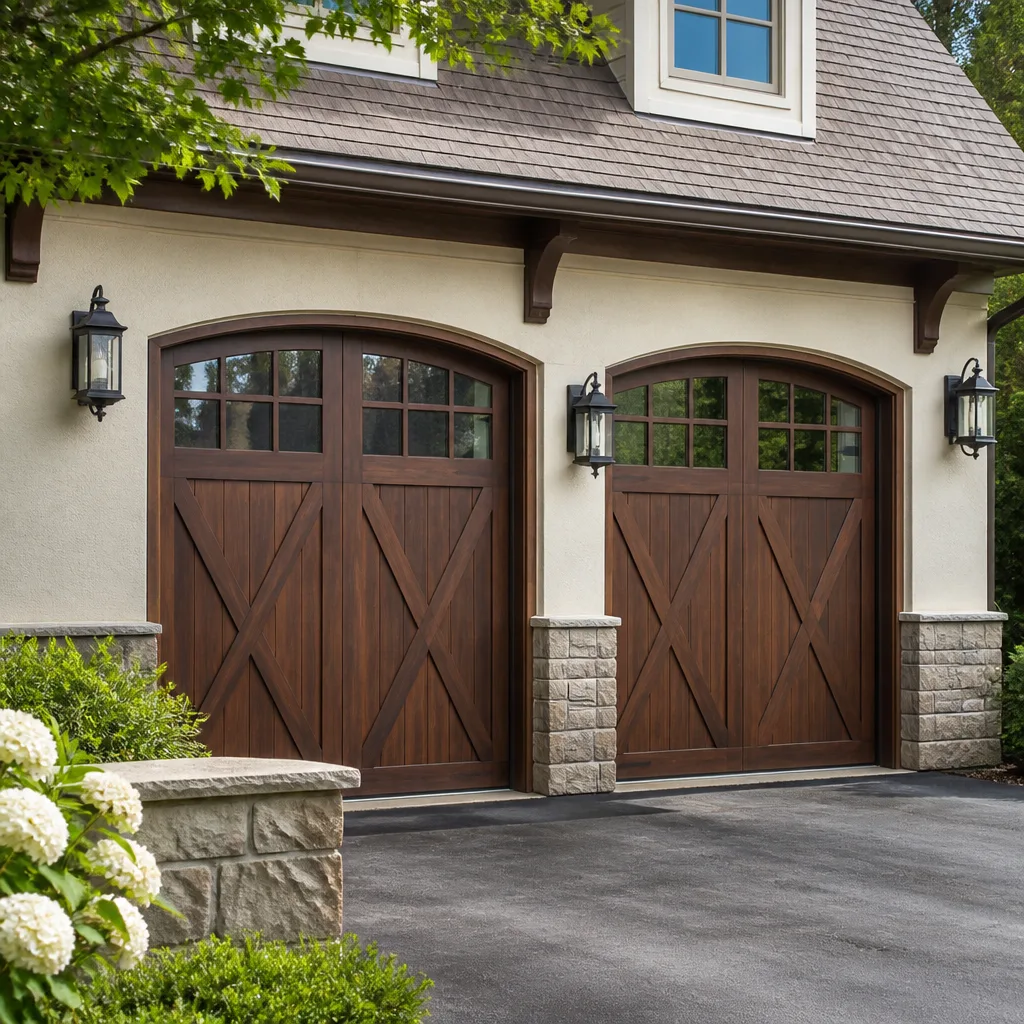 Carriage house
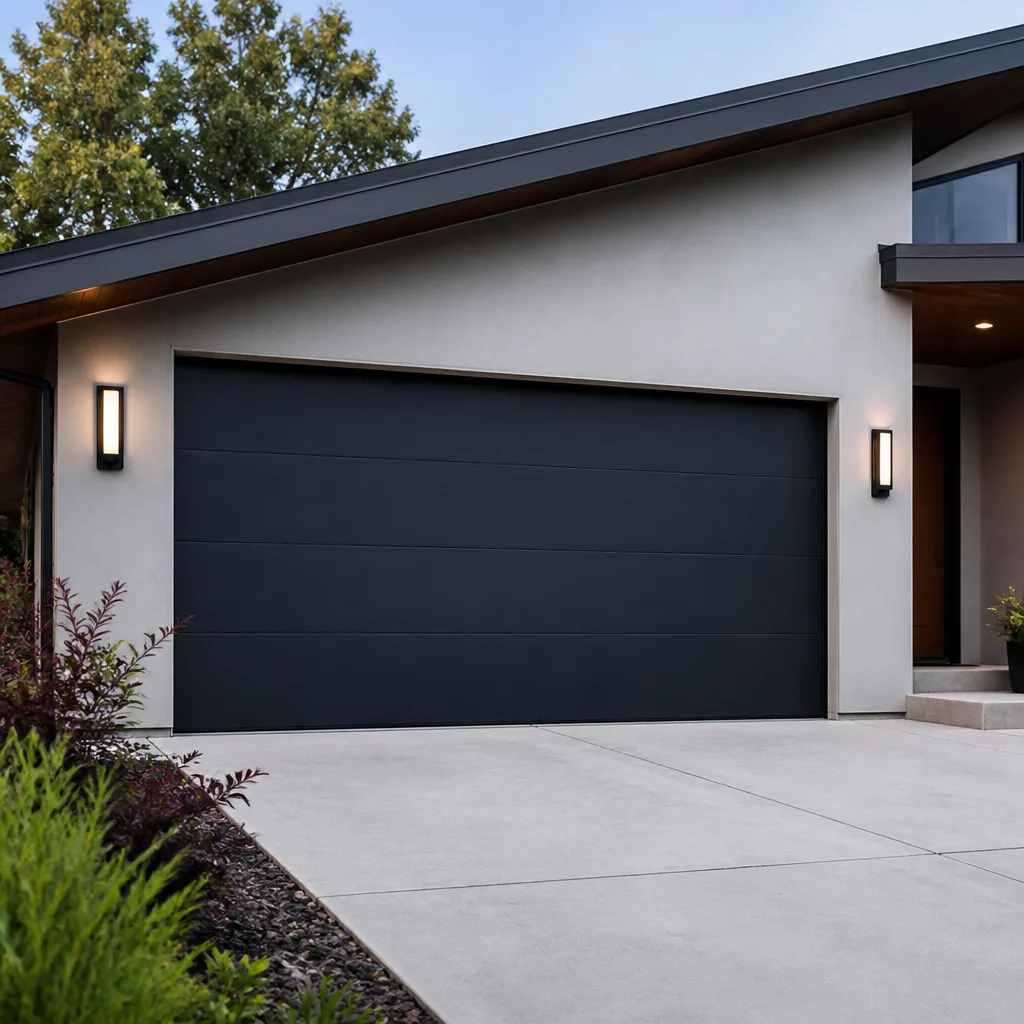 Modern flush
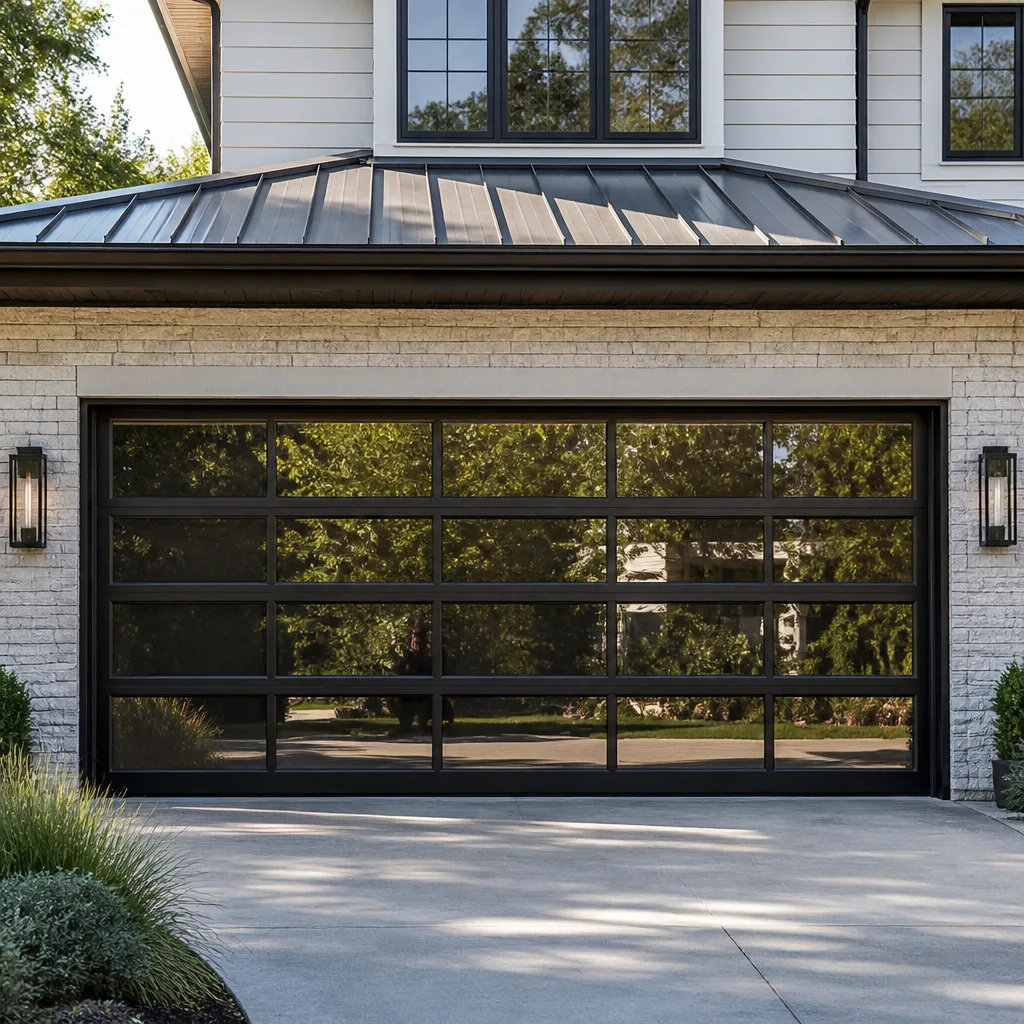 Full-view glass
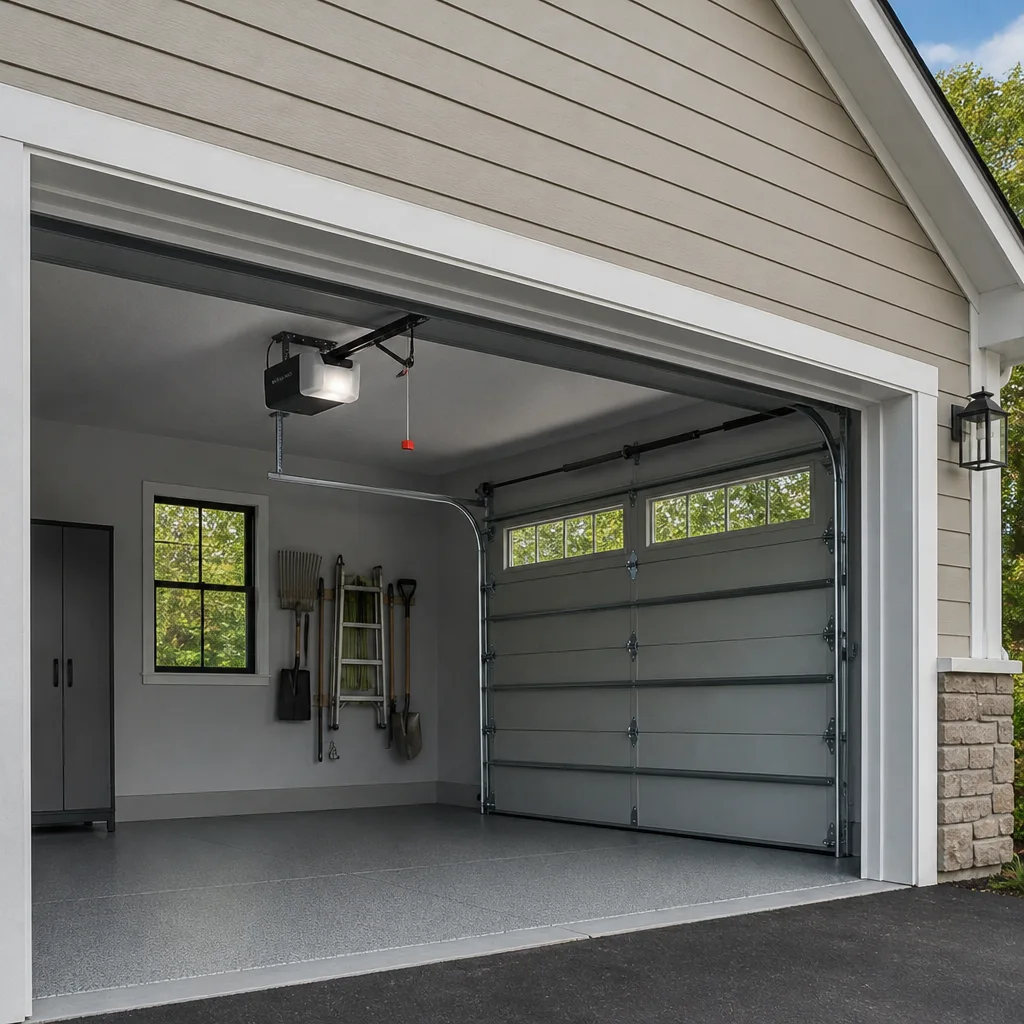 LiftMaster openers
 Chamberlain openers
Full 25-point door and opener safety check with every visit - springs, cables, rollers, tracks, and your LiftMaster or Chamberlain opener included
You get a price before we start. It does not change when the truck arrives.
Get your free estimateGarage Door Warning Signs: A West Hollywood Homeowner’s Reference Guide
A garage door spring doesn’t snap without warning. It telegraphs the failure for weeks, sometimes months, through slower travel, louder operation, and a slight unevenness in how the door lifts. The homeowners who call us for emergency service on a broken spring almost always describe symptoms they noticed and dismissed. This guide teaches you the specific pattern recognition that separates a $80 fix from a $600 emergency call. We’ve written it specifically for West Hollywood, where many homes use the garage as primary vehicle storage and a door that fails at 7 a.m. on a workday isn’t an inconvenience, it’s a schedule wrecking event. For year-round maintenance guidance, see our seasonal care guide.
Quick Answer
Garage door warning signs in West Hollywood include grinding or popping sounds during operation, a door that hesitates or reverses mid-travel, visible rust or fraying on springs and cables, and an opener that runs longer than it used to. Any of these symptoms means a component is wearing toward failure. Most can be repaired for under $200 if caught early, while ignored symptoms typically escalate into spring failures or cable snaps that cost $350 to $600 and leave your vehicle trapped.
Styles & brands we work with
Table of Contents
- The Sound Taxonomy: What Your Garage Door Is Telling You
- Visual Cues You Can Check From Ground Level
- Opener Behavior Changes That Signal Trouble
- The ‘Still Opens But Barely’ Trap
- Severity Triage: Schedule It, Call Today, or Stop Now
- The Spring Failure Timeline: What Happens in the Final 72 Hours
- West Hollywood-Specific Factors That Accelerate Wear
- Preventive Maintenance: The $100 Habit That Prevents $600 Emergencies
The Sound Taxonomy: What Your Garage Door Is Telling You
Every sound a garage door makes maps to a specific component and a specific wear pattern. The problem is that most homeowners lump all door noises into one mental category called “it’s getting old.” That’s like calling every car noise “engine trouble.” Here’s what we listen for when a West Hollywood homeowner describes a sound over the phone, because the sound tells us which part is failing and how urgent the call actually is.
Grinding
Grinding is almost always a roller problem. The rollers, those small wheels that guide the door along the metal tracks, have bearings inside them. When those bearings wear out, the roller stops spinning and starts sliding. Metal dragging on metal creates that grinding sound. In West Hollywood, where garage doors cycle multiple times daily for residents who commute, roller bearings wear faster than on a suburban door that opens twice a week. Left unrepaired, a seized roller will eventually chew through the track itself, turning a $15 roller replacement into a $250 track replacement.
Squealing
Squealing is friction without failure, usually. It means hinges, rollers, or the opener’s drive mechanism need lubrication. On LiftMaster and Chamberlain belt-drive openers, a squeal often comes from a dry belt tensioner. On Genie screw-drive models, it’s the screw itself needing grease. The fix is usually simple, but here’s the catch: if the squeal has been present for months, the components may have worn past the point where lubrication helps. A squeal that disappears when it rains, or when humidity is high, indicates dry metal surfaces. A squeal that persists regardless of weather indicates worn surfaces.
Popping
Popping is the sound of a torsion spring that’s beginning to bind. The spring coils don’t unwind evenly as the door closes, so sections of the spring stick and release in small jumps. Each pop is a micro-slip of the spring on its shaft. This is one of the most misdiagnosed sounds in the trade. Homeowners hear it and think it’s the door panels settling. It isn’t. A popping spring is a spring that’s losing its ability to distribute tension evenly, and uneven tension is exactly what causes a spring to snap. If your door pops, you’re not days from failure, but you’re likely months from it, and the repair cost hasn’t escalated yet.
Banging
A single bang when the door reaches the fully open or fully closed position is usually an issue with the door’s travel limits or the opener’s force settings. A repeated banging during travel, however, indicates a section of the door is out of alignment and catching on something. It might be a bent track, a loose hinge, or a panel that’s warped from heat. West Hollywood’s summer temperatures regularly hit 90 degrees, and doors with dark finishes facing west or south absorb direct sun all afternoon. Thermal warping creates gaps in the panel seams, which creates that banging rhythm as the door moves.
Visual Cues You Can Check From Ground Level
You never need to touch anything to assess your door’s health. Standing in your driveway with the door closed, you can check several things that professional technicians check. This visual inspection takes about ninety seconds and can identify problems weeks before they become failures.
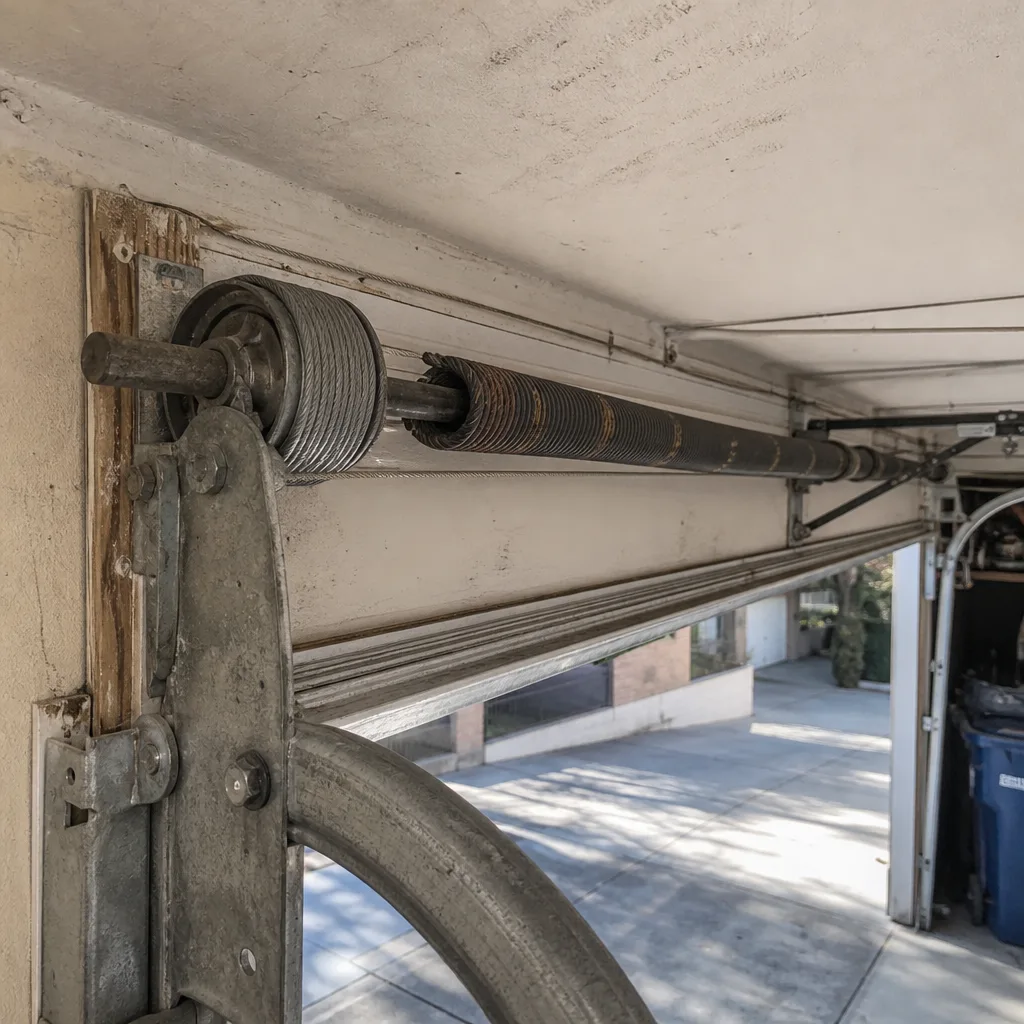
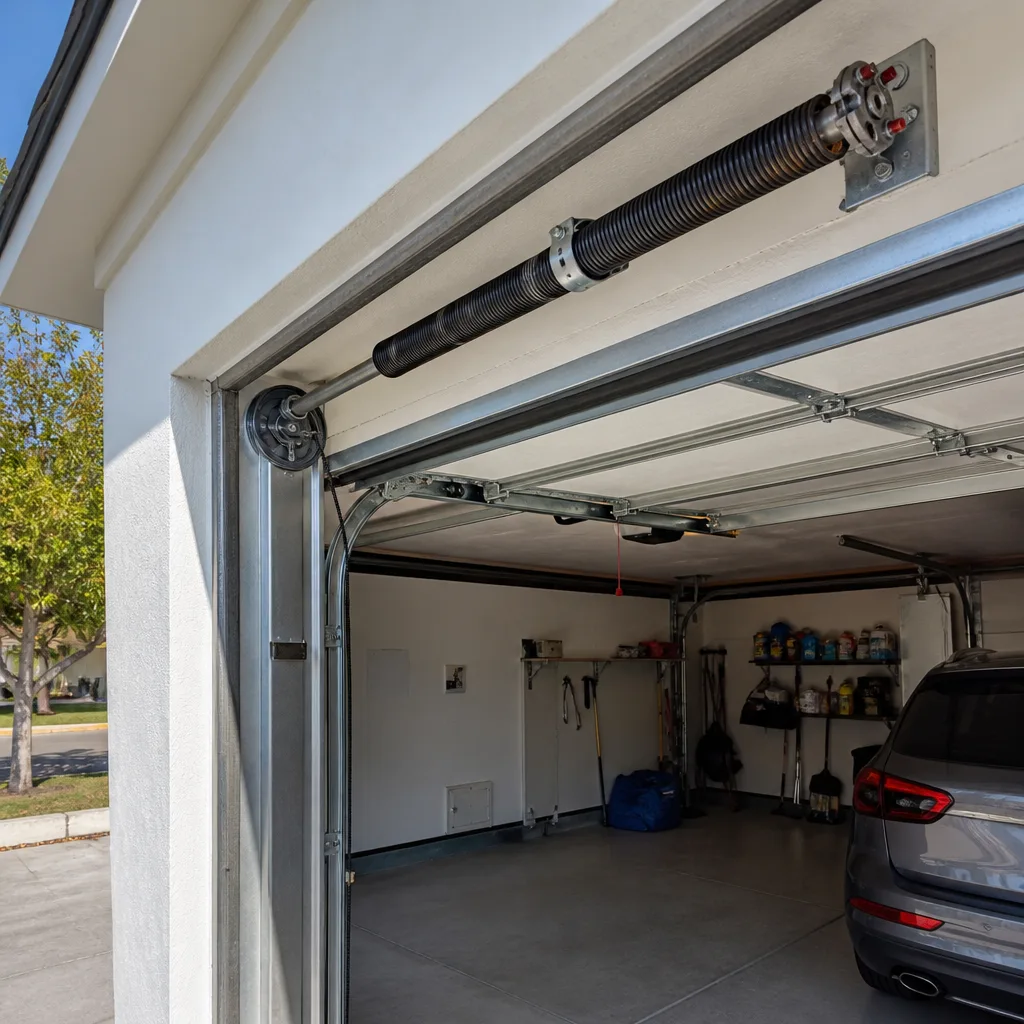
- Look at the springs above the closed door. Torsion springs are the thick coils mounted on a metal shaft above the door opening. If you see a gap in the coil, like a clean one-inch space where the spring was separated, the spring has already broken and should be replaced before the door is used again. If you see rust, the spring is aging. Rust creates friction between coils, and friction creates weak points.
- Look at the cables on both sides. The cables run vertically along the door edges, connecting the door to the spring shaft. You’re looking for fraying, which looks like stray wire strands poking out from the main cable. One frayed strand means the cable’s structural integrity is compromised. Cables under tension don’t wear gradually, they fail catastrophically, and a snapped cable sends the door slamming down unevenly.
- Look at the rollers. The rollers are visible where the door sections meet the tracks. If a roller looks sideways, it’s worn. If a roller is missing chunks of its wheel, it’s seized. If a roller isn’t centered in its track, the track may be bent or the door may be shifting.
- Look at the track bends. Stand back and scan the curved section of track where the door transitions from vertical to horizontal. Any kink or flattening in that curve changes how the door transfers weight, which puts uneven load on the springs and the opener.
- Look at the door’s closed position. When the door is down, the bottom panel should sit flush against the ground across its entire width. If one corner has a gap, the door is out of balance or a cable has stretched unevenly.
None of these observations require a ladder, tools, or contact with any moving part. We encourage homeowners in West Hollywood to do this check once a season. The people who catch worn rollers and frayed cables during a routine look are the ones who never experience the midnight spring snap.
Opener Behavior Changes That Signal Trouble
Your garage door opener is not just a motor. It’s a diagnostic instrument that records how hard the door is to lift and close. When the door’s mechanical components wear, the opener compensates by working harder, and that compensation shows up in behavior changes that most people notice but dismiss.
Hesitation When Starting
If the opener pauses briefly before the door starts moving, that’s the motor building additional torque to overcome resistance. Doors in good mechanical condition start moving almost instantly when you press the button. Hesitation means the door is heavier than it should be, and that extra weight usually comes from worn springs. On LiftMaster and Chamberlain models, the hesitation is subtle, maybe half a second. On Genie openers, it’s more noticeable because the screw-drive mechanism doesn’t hide resistance as well.
Reversing Mid-Travel
An opener that starts closing and then reverses back up is usually not malfunctioning. It’s detecting excess force, which is a safety feature. The most common cause is a door that’s binding on its tracks, forcing the opener to push harder than its safety threshold allows. Some homeowners override this by holding the wall button down, which defeats the safety sensor. We strongly recommend never doing this. The reversal is telling you something, and overriding it just lets the underlying problem worsen.
Running Longer Than Usual
This one is easy to miss because it happens gradually. A door that once opened in 12 seconds and now takes 15 seconds has a component that’s slipping. It could be a worn chain or belt on the opener drive, a slipping sprocket, or a door that’s binding and slowing the motor under load. Track your door’s open time occasionally. A three-second increase is meaningful and worth investigating at the garage door opener repair level rather than waiting for a full failure.
Stopping and Restarting
If the door stops midway, then resumes when you press the button again, the opener is hitting thermal overload. The motor is overheating from working against excess resistance. This is more common in West Hollywood during summer months when ambient garage temperatures already run high. A door that was fine in January but stops repeatedly in August has a mechanical issue that the heat is amplifying.
The ‘Still Opens But Barely’ Trap
This is the symptom pattern that creates most emergency calls in West Hollywood. The door opens, but it strains. It slows down around the halfway point. It might shimmy slightly. From the driver’s seat, everything works well enough, so the homeowner assumes they have time.
Here’s what’s actually happening: a torsion spring’s tension decreases as it wears. The spring still has enough stored energy to lift the door, but it’s working at 70 or 80 percent of its design capacity. Your opener is making up the difference, which means the opener’s motor is wearing prematurely too. The system is in a death spiral where two components are degrading simultaneously.
The failure doesn’t happen during operation. It happens when the door is closed, and the spring is under maximum tension. A spring that’s been slowly losing structural integrity finally gives out, usually with a sound like a gunshot, and the door becomes immovable. Not slow, not loud, immovable. If your car is in the garage when this happens, you’re not driving to work that day.
In West Hollywood, this is worse than in other areas because of how many homes have shared garage walls. A spring that snaps in a duplex or condo garage can be heard by neighbors, which adds stress to an already urgent situation. And because many West Hollywood homes were built in the 1950s and 1960s with original garage hardware, we see a concentration of doors that are at or beyond the typical 10,000-cycle spring lifespan.
Our advice: if your door moves slower than it did a year ago, that’s not aging. That’s a component asking for attention, and the repair window is open right now.
Severity Triage: Schedule It, Call Today, or Stop Now
Not every warning sign is an emergency. Here’s the triage system we’ve developed from thousands of service calls in West Hollywood. Print it on a notecard and tape it next to your opener button.
Tier 1: Schedule It This Week
- Squealing that goes away when humidity rises
- Mild grinding that only occurs at one point in the travel
- Hesitation under one second when starting
- A roller visible spinning off-center
- Light surface rust on springs (not deep pitting)
- Opener running two seconds longer than it did six months ago
These are early-stage wear indicators. The door is functioning, and the repair cost is at its lowest. A service call this week likely means a roller replacement, lubrication service, or a simple adjustment. None of these exceed $150 in most cases. For homeowners in West Hollywood who can schedule around work, this is the smartest tier to be in. Call Gold Star Garage Door Service home and book a diagnostic visit before the symptom escalates.
Tier 2: Call Today, Don’t Use the Door More Than Necessary
- Popping sound from the spring area during every cycle
- Door reversing mid-travel consistently
- Visible fraying on either cable
- Door shimmying or shaking noticeably while moving
- Opener stopping and needing a second press to finish
- Any sound you’ve been hearing for more than two weeks that’s getting louder
These symptoms indicate active component degradation. The door might still operate, but you’re cycling a system that’s losing structural integrity with every use. In our experience, Tier 2 symptoms convert to full failures within 30 to 60 days. The repair cost is still moderate, typically between $150 and $300. The risk is that you’ll forget about it, and the next time you notice will be when the door refuses to open. Garage Door Repair in West Hollywood should be scheduled same-day or next-day when you’re in this tier.
Tier 3: Stop Using the Door and Call Now
- A visible gap in a torsion spring coil (the spring has broken)
- A cable that has snapped or come off its drum
- Door attempting to close but jerking violently
- One side of the door hanging lower than the other when partially open
- Loud bang that occurred while the door was stationary
- Door falling quickly when released from the opener
These are structural failures, not warnings. Do not open or close the door manually. Do not attempt to reattach a cable or reset the opener. The components under tension can release with enough force to cause serious injury. Call (866) 810-8325 and describe exactly what you’re seeing. We’ll walk you through whether the door can be left as-is until we arrive or whether you need to take additional safety precautions. We dispatch to West Hollywood addresses throughout the day and evening.
The Spring Failure Timeline: What Happens in the Final 72 Hours
Torsion springs don’t fail randomly. They follow a predictable pattern that we’ve documented across hundreds of service calls in West Hollywood. Understanding this timeline helps you recognize when you’re in the danger window.
Week 3 to Week 1: The door starts making a subtle popping sound during the first and last few inches of travel. The spring coils are beginning to bind. You notice the door looks slightly uneven when fully open, one side maybe an inch higher than the other. Nothing feels urgent. This is the last window for a cheap fix. Spring replacement at this stage is a planned expense, not an emergency.
Final 72 Hours: The popping becomes constant during operation. The door might start reversing on its own when opening. You might notice the opener motor sounds strained, like a car climbing a hill in too high a gear. If you stand near the spring shaft while the door runs, you can hear a faint grinding that wasn’t there before, the spring coils wearing against each other under uneven tension.
Final 24 Hours: The door operates, but something feels wrong enough that you’re paying attention now. It might stop halfway and pause. When you look at the spring, you notice it’s no longer perfectly cylindrical, one section might look slightly stretched. Anyone who has looked at their door’s spring a hundred times knows when it doesn’t look right. Trust that instinct.
The Moment of Failure: Almost always when the door is closed. The spring is under maximum tension in the closed position. The snap sounds like a gunshot or a car backfire. In West Hollywood’s denser neighborhoods, homeowners often report that their neighbor heard it. The door becomes dead weight, and you won’t be able to lift it manually. The cables usually snap immediately after, whipping inside the track.
Call us immediately at (866) 810-8325. We carry replacement springs for LiftMaster, Chamberlain, Genie, and Clopay door systems on our trucks, and we can usually have a door operational the same day. Prices are quoted and agreed before any work begins.
West Hollywood-Specific Factors That Accelerate Wear
Garage door components don’t age at the same rate everywhere. West Hollywood has a specific set of conditions that we’ve learned to account for when assessing a door’s wear rate and predicting remaining lifespan.
Daily Use Cycles Are Higher
West Hollywood residents drive. The city has a Walk Score in some neighborhoods, but most single-family homes and duplexes rely on cars for commuting, errands, and entertainment. A garage door in West Hollywood might cycle four to six times daily, compared to two cycles in a suburb where one spouse stays home. At five cycles per day, a standard torsion spring rated for 10,000 cycles lasts about five and a half years. Homes where both partners commute daily can see spring lifespans as short as four years. When we replace springs on a West Hollywood door, we recommend higher-cycle springs specifically because we know the usage patterns in this city.
Coastal Air and Salt Content
You’re about eight miles from the ocean, which means salt content in the air is reduced but not absent. On days with marine layer pushing inland, which is common in May and June, the humidity rises and settles on metal surfaces. Unprotected springs and cables develop surface corrosion faster than they would in the Valley. We see more rust-related spring failures in West Hollywood than in inland markets, and the corrosion weakens the spring steel at the molecular level long before it becomes visible.
Micro-Seismic Activity
This one surprises people, but West Hollywood sits near active fault lines. The small earthquakes and tremors that register under 3.0 and that long-term residents barely notice, still shift the framing of older homes. A garage door that was perfectly aligned on its tracks can develop binding after a series of small tremors. If you’ve noticed your door getting louder after a week where you felt those small overnight jolts, the door’s alignment may have shifted. It’s worth having the track alignment checked on Garage Door Installation in West Hollywood homes built before 1980, which are more prone to subtle settling.
The Heat Island Effect on Dark Doors
West Hollywood’s urban density creates a heat island effect that pushes summer temperatures higher than surrounding areas. Dark-colored garage doors facing south or west absorb direct sun for six hours a day in July and August. That heat transfers into the door panels, which expands the metal or warps the composite. The heat also cooks the grease out of roller bearings and reduces the viscosity of door lubricants. If your door faces the afternoon sun, expect roller and hinge wear to track faster than a neighbor’s door that faces north.
Preventive Maintenance: The $100 Habit That Prevents $600 Emergencies
Here’s the financial logic that our best customers have internalized. A spring replacement costs between $250 and $400 depending on your door’s weight and spring type. An emergency spring replacement, where your car is trapped and you need someone now, costs the same for parts but adds the cost of your missed day, your stress, and the damage that happens when a spring snaps and yanks the cables off their drums. That secondary cable damage can add another $150 to the repair.
A seasonal tune-up costs under $100 and catches the problems that lead to spring failures:
- Spring tension measurement (every 12 months): We measure whether the spring is still delivering its rated lift. A spring that’s lost 10 percent of its tension is flagged for replacement while it’s still a planned expense.
- Cable inspection (every 6 months): Fraying is visible early if you know what to look for. We replace cables preventively at the first sign of strand separation.
- Roller and hinge inspection (every 12 months): Seized rollers get replaced before they can damage tracks. Hinges get tightened before they loosen enough to affect panel alignment.
- Lubrication service (every 6 months): The right lubricant on the right components reduces friction and extends the life of everything from rollers to the opener drive.
- Opener force setting verification (every 12 months): The opener should not be working harder than it was designed to. If force settings have migrated upward, that’s a sign the door is becoming mechanically heavier.
The homeowners who schedule this maintenance tend to own their doors for 20-plus years without a single emergency. The ones who call only when something breaks tend to repeat the emergency cycle every four to five years. Both groups spend the same total money over time. One group gets to choose when they spend it.
Common Mistakes to Avoid
- Lubricating to mask a mechanical problem. A spray-on garage door lubricant will quiet a grinding roller for a few days, but the bearing is still seized. You’ve bought a little quiet time and let the roller grind a deeper groove into the track. Lubrication is maintenance, not repair.
- Continuing to use a door with a visibly broken spring. We see this in West Hollywood apartment buildings and condos more than single-family homes. A broken spring means the opener is now lifting the entire weight of the door alone. That kills a $300 opener motor to avoid a $300 spring replacement, and the door can fall if the opener’s brake fails.
- Replacing the opener when the door is the problem. If your door is heavy because the springs are worn, a new opener will just strain against the same resistance and fail early. Diagnose the door balance before replacing the opener. The team at Gold Star Garage Door Service checks the door first on every opener call for exactly this reason.
- Ignoring the sound because the door still works. The most expensive phrase in the garage door trade is “it was working fine yesterday.” A door that’s been grinding for three months and then fails was not working fine. It was failing slowly.
- Overtightening or adjusting the spring yourself. Torsion springs hold enough energy to cause severe injury or death if mishandled. Adjusting spring tension requires specialized tools and training. This is not a DIY job, and no amount of YouTube instruction replaces hands-on experience.
- Painting over rust on springs or cables. Paint hides the rust but doesn’t stop the corrosion underneath. Worse, paint can change the coefficient of friction between spring coils, which affects how they unwind. If there’s enough rust to be visible, have the component assessed.
- Using the door as a shortcut for bringing in groceries while a repair is pending. A Tier 2 symptom means the door is degrading with each cycle. Every additional cycle shortens your window. Park outside and use the front door until the repair is done.
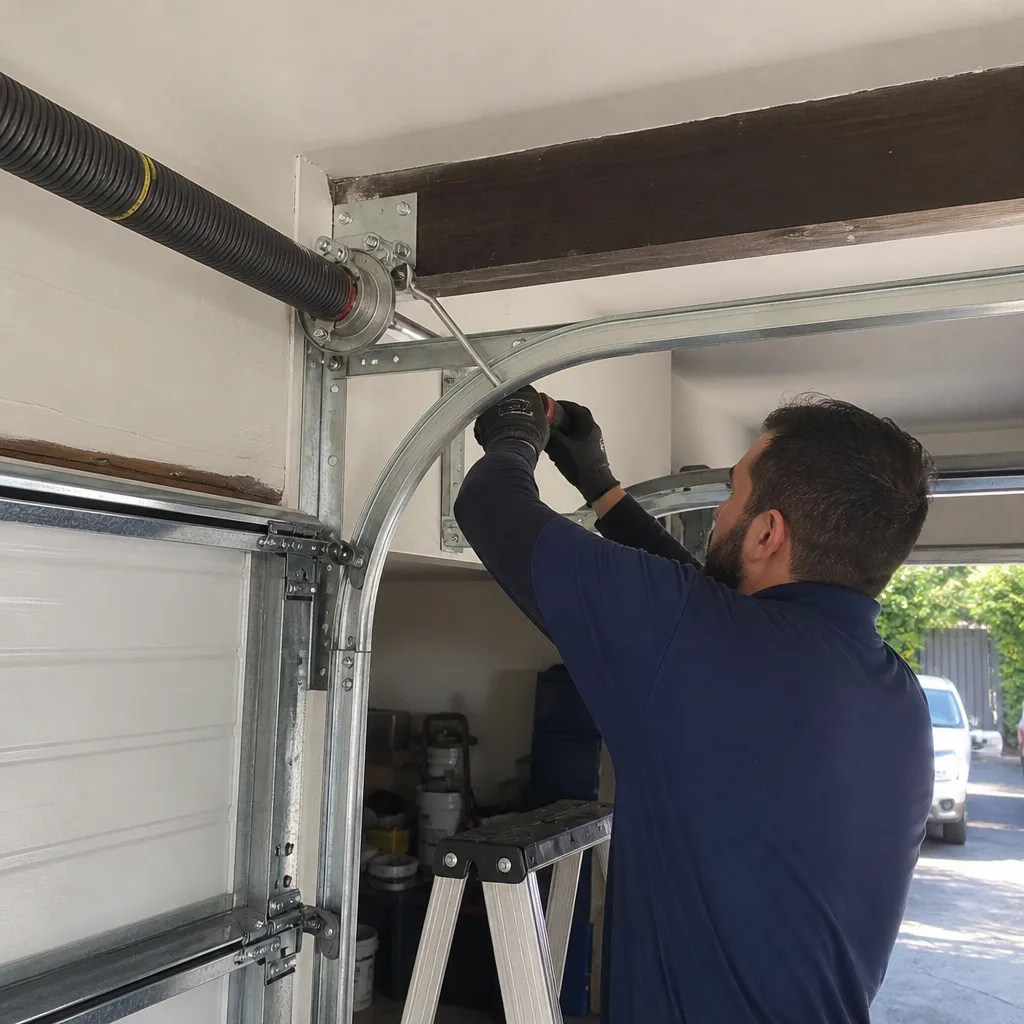
See the difference
 Before
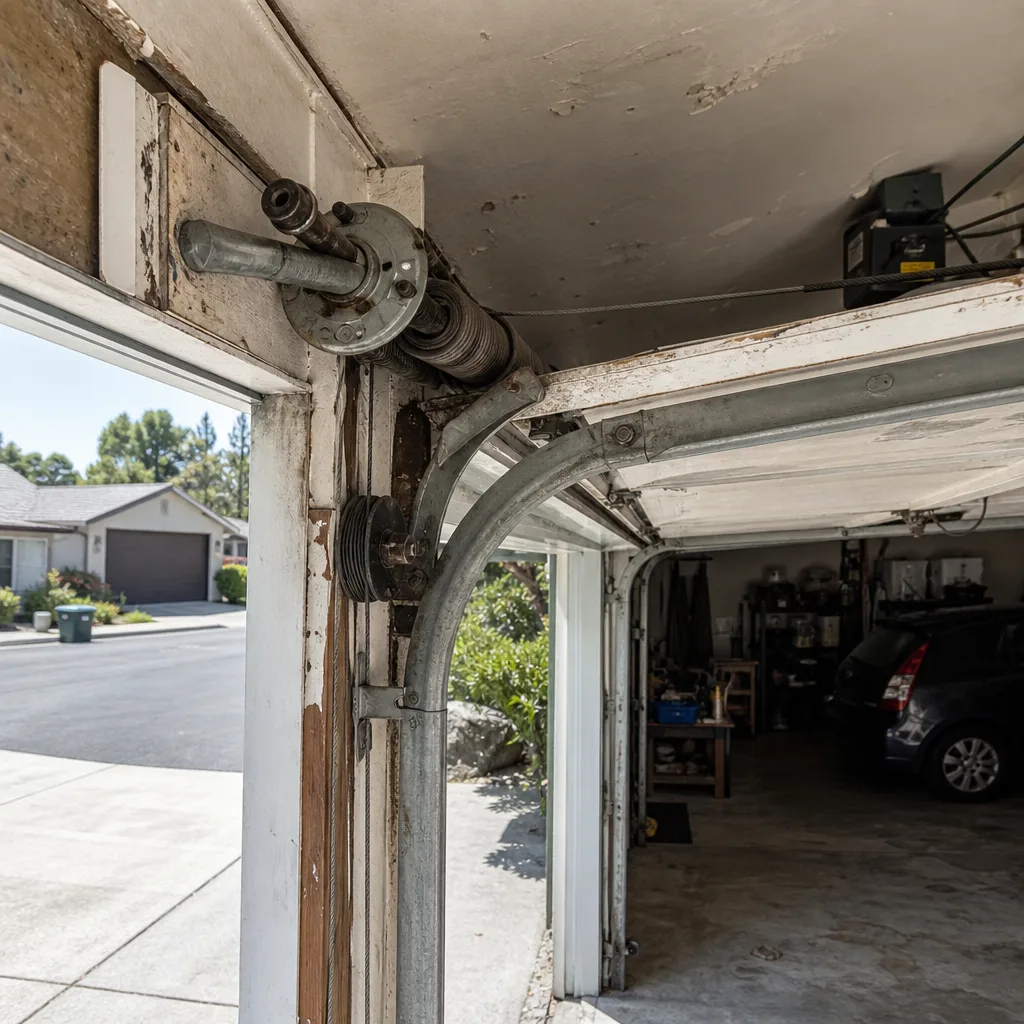
 After
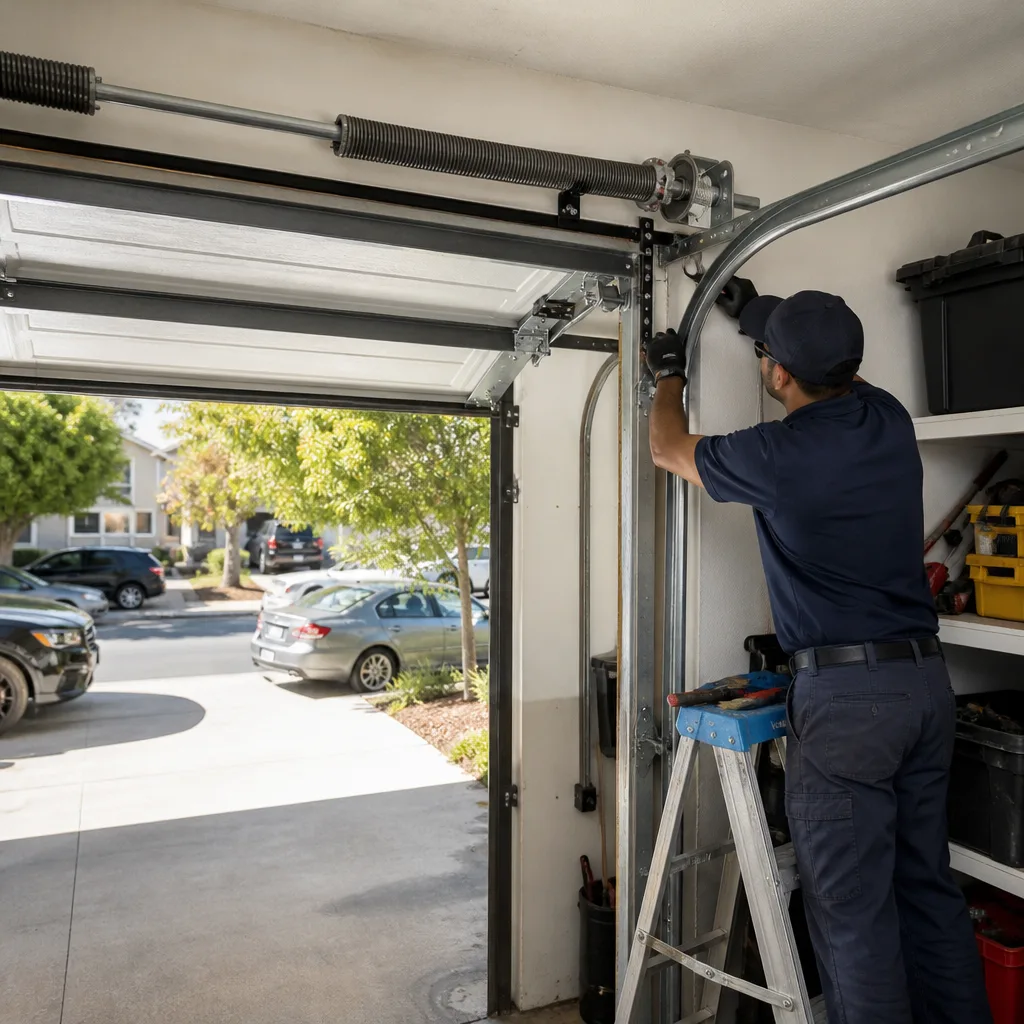
 Before
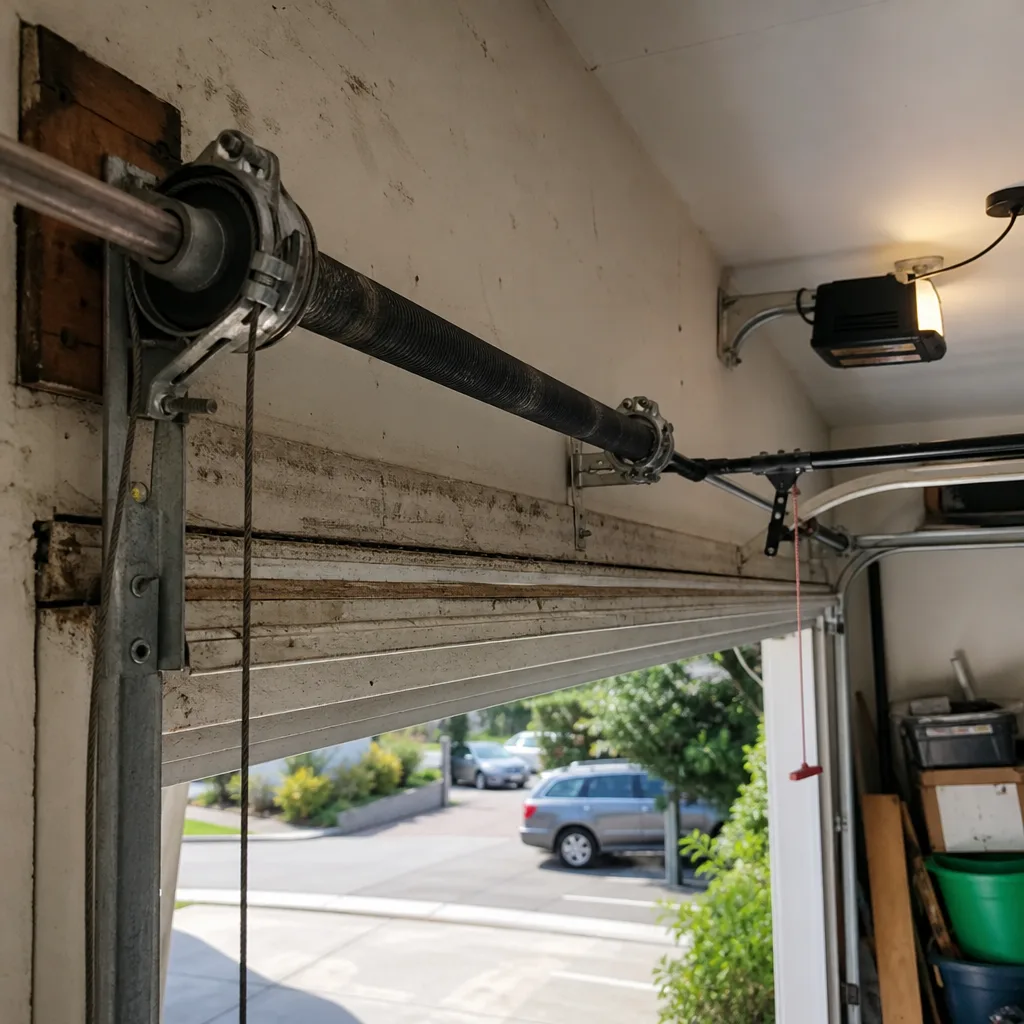
 After
 Before
 After
When to Call a Professional
Call a professional when you hear popping, see fraying, notice hesitation, or observe any of the Tier 2 or Tier 3 symptoms described above. Working with garage door springs, cables, and high-tension systems is genuinely dangerous work that requires training, proper tools, and respect for the stored energy in the system. We’re glad to walk you through what you’re seeing over the phone at (866) 810-8325. If you’re in West Hollywood, Garage Door Opener Repair in West Hollywood and door repair are both services we offer with free estimates. We work on all major brands including LiftMaster, Chamberlain, Genie, and Clopay, and we quote every price before work starts, so you’ll know the cost before anything gets touched.
Frequently Asked Questions
The most common warning sign we see in West Hollywood is a door that slows down noticeably around the halfway point of its travel. This indicates the springs are losing tension and the opener is compensating by working harder. Most homeowners describe it as “it’s been a little slow lately,” which is exactly the pattern that precedes a spring failure. Call (866) 810-8325 for a spring tension check before that slowness becomes a snap.
You can use it for a short period, but every cycle is one cycle closer to a spring failure. A popping sound means the spring coils are binding unevenly, and that unevenness creates stress concentrations that lead to breakage. If the popping just started, you have days to weeks, not months. Schedule a repair and minimize door use in the meantime.
Early-stage repairs, like roller replacement or lubrication service, typically run $80 to $150. Mid-stage repairs, like cable replacement or track realignment, run $150 to $300. A spring replacement runs $250 to $400 depending on your door’s weight and whether you choose standard or high-cycle springs. These are the prices we quote and agree with customers before any work begins.
We stock replacement parts for LiftMaster, Chamberlain, Genie, and Clopay systems on our service vehicles. Because we service all major brands rather than pushing a single product line, we arrive prepared to repair what you already own rather than selling you a replacement you don’t need. If you’re evaluating options, our guide on Choosing the Right Garage Door Brand: A Buyer’s Guide for West Hollywood covers what matters most. If a specialized part isn’t on the truck, we can source it same-day or next-day in the West Hollywood area.
Not necessarily. Age alone isn’t a reason to replace a door. The condition of the springs, cables, rollers, and tracks matters more than the year stamped on the panel. A 20-year-old door with well-maintained components can run safely for another decade. We recommend a professional inspection to give you an honest assessment of what your specific door needs, which may be nothing more than a spring replacement and a tune-up.
Don’t use the door. Don’t try to lift it manually. The door is now dead weight, and the cables may be compromised too. Call (866) 810-8325 and let us know what happened. We’ll schedule the earliest possible service for your West Hollywood address, and we’ll give you an honest quote before we start. Your car can stay in the garage until we arrive, and in most cases we can have the door operational the same day.
The Bottom Line
Garage doors fail in predictable ways, and those ways announce themselves through sounds, visual changes, and altered opener behavior long before the actual failure occurs. A grinding roller costs $15 to replace if caught early. A spring replacement costs $250 to $400 if scheduled on your terms. An emergency spring failure, with a trapped car and secondary cable damage, costs $500 to $600 and ruins your day. The difference between these scenarios is whether you notice the warning signs and act on them. West Hollywood homeowners who check their door’s springs, cables, rollers, and openers once a season, and who call at the first sign of a change, almost never experience the emergency. We maintain six neighborhoods of garage doors in this city, and the pattern is consistent: attention is cheaper than repair. If you’ve noticed any of the warning signs described in this guide, call (866) 810-8325. We’ll assess what’s happening and tell you exactly what it costs to fix.
Written by the team at Gold Star Garage Door Service, serving West Hollywood since 2018.